Labels

Thursday, June 09, 2016

Film Review - TEENAGE MUTANT NINJA TURTLES: OUT OF THE SHADOWS

Unlike its noxious sludge-pile predecessor, Teenage Mutant Ninja Turtles: Out of the Shadows can make the proud claim of not being the worst major studio release of its year. A noticeable course correction and casual retconning of the depressingly successful 2014 franchise reimagining, this sequel, directed by David Green, relentlessly pumps the classic animated series nostalgia gas pedal. Not only are Rocksteady and Bebop on hand to rectify the generation-scarring failed promise of 1991’s Secret of the Ooze, so are Krang, Casey Jones, Baxter Stockman, the Technodrome and the Pizza Wagon (*complete with manhole-shooting play action)! It doesn’t add up to much of a movie, but will undoubtedly sell some merchandise. And let’s not pretend the latter achievement wasn’t the primary creative intent.

Once again returning to his powerful producer chair, Michael Bay’s presence can be felt strongly throughout. As far as some of the slick cinematic style and action goes, that isn’t necessarily a bad thing. However, Out of the Shadows also boasts the tedious half-assed and repellent hallmarks of the Transformers franchise (Bumblebee even has a cameo). The plot is seemingly made up after the fact in the editing room, and there’s just enough frat jerk male posturing, awkward misogyny, crass product integration and scatological juvenility to fill out the standard check list. Want to see a giant CG warthog enthusiastically stare down his pants at his altered junk? This is the motion picture for you, my friend!

As Out of the Shadows opens, the now slightly kinder and gentler green machines are suffering serious morale issues. Confined to their underground dwellings, alongside wise sensei Splinter (Peter D. Badalamenti, voice by Tony Shalhoub), they yearn for acceptance from the humans they protect above. While Leonardo (Pete Ploszek – taking over voice duties from Johnny Knoxville) and Donatello (Jeremy Howard) are willing to make the necessary sacrifice, Michelangelo (Noel Fisher) and Raphael (Alan Ritchson) are going stir crazy and fostering growing resentment towards their brothers’ willingness to continue the lonely status quo. 

Crisis brings them back to the surface, though, when April O’Neil (Megan Fox) stumbles across a conspiracy linking TCRI scientist Baxter Stockman (Tyler Perry) to the incarcerated – and inexplicably no longer monstrous and, um, dead - Shredder (Brian Tee, replacing Tohoru Masamune). After the heavily bladed adversary is transported to the mysterious Planet X, during a daring prison convoy escape, he strikes a pact with the slimy, sinister alien Krang (Brad Garrett) to collaborate on a plan for Earthly domination. With a potential doomsday scenario on the horizon, the turtles, April and disgraced corrections officer Casey Jones (Stephen Amell) embark on a dangerous scavenger hunt to track down otherworldly technology that will prevent the invading conqueror from entering their realm. Unfortunately, this task is further complicated by the emergence of Stockman’s lumbering experimental animal/human hybrid warriors; the unstoppable rhino Rocksteady (WWE wrestler Sheamus) and his snorting warthog accomplice Bebop (Gary Anthony Williams).

Among the litany of maddening problems plaguing the previous entry, the most damning was its utter inability to make the title protagonists likeable. Oddly, this had never been the case previously. And although Out of the Shadows hasn’t quite solved the problem it is closer to the right track. The designs are still horrendously unappealing to look at, and they rarely seem to occupy any sort of tangible reality (the movie is so fake-looking it should probably have been 100-percent animated), but the personalities - Donatello in particular - feel more polished, energetic and distinctive. Michelangelo, alas, remains a grating bro-tastic embodiment of Bay-ian id and would benefit from even more toning down. At least Master Splinter no longer looks and behaves like psychotic nightmare fuel, which is nice, and he actually scores a funny or two.

These Poochie-fied versions of the TMNT are again undone by not being grounded by compelling storytelling. Whereas the 1990 film plunked them into an adventure that was fun, lively, and even occasionally emotional, Out of the Shadows writers Josh Applebaum and Andre Nemec strand them in a nonsensical narrative that feels like bad fanboy improv. During Rocksteady and Bebop’s creation we’re informed humans have dormant genes connecting them to various members of the animal kingdom. Sure.
Apparently content to aspire to the base artistic heights of an old Saturday morning cartoon/toy commercial, the movie often lazily tosses out internal logic with the sewer water. Shredder’s abrupt trip to Dimension X unfolds as if crucial footage was lost after production wrapped, for example, and at one point the heroes fly from Brazil to New York seemingly in minutes. Even worse, the all-important McGuffin quest driving the picture feels ripped out of one of Bay’s cruddy Transformers flicks and just consists of characters frantically competing for confusing, vaguely-defined plot points without any momentum or suspense.

The screenplay does correctly place the turtles center stage, though, with Out of the Shadows’ many supporting figures offering distractions generally more appreciated than irritating. Since no actor is capable of delivering a good performance with material this dire, those who camp it up walk away looking the best. Gone Girl scene-stealer Perry’s turn as the loony Stockman almost (Almost!) persuades us into desiring a Baxter-as-fly threequel, and Sheamus and Williams are unexpectedly enjoyable as Rocksteady and Bebop, who are done about as well as one could hope.

Fox’s April is more problematic; the actress has an active non-damsel role with plenty to contribute, yet is alternately presented as shameless eye candy in tight tank tops and, early on, a ludicrous Britney-esque schoolgirl costume. That said she has serviceable chemistry with the amiable Amell - whose convincing physicality helps make up for the fact he’s as edgy as Batman Forever-era Chris O’Donnell – and a mugging Will Arnett as Vernon Fenwick. As a concerned citizen, it’s also my responsibility to note the immeasurably talented Laura Linney shows up as a nosy police chief, possibly against her will. Future viewings will have to determine whether she’s blinking H-E-L-P-M-E in Morse code.

Franchise newcomer Green, despite being saddled with a lost cause screenplay, is still head and shoulders above previous director Jonathan Liebesman as far as colorful visuals go. His early action sequences – predominantly the early truck chase and a wildly over the top race down the river rapids of Brazil – are poppy and engaging, and he’s undeniably strong at staging impact shots ready made for trailers and TV spots. By the time the city-shaking climax hits, however, the helmer is totally overwhelmed, delivering a final battle with Krang (barely a character, sadly) that’s the most fragmented and unsatisfying computer effects-driven finale since last summer’s wretched Fantastic Four.

As disposably inane and hacky as Teenage Mutant Ninja Turtles: Out of the Shadows is, it’s nonetheless undeniably aided by the bottom of the barrel expectations established by part one. Hardcore brand loyalists will eat up the non-stop fan service and likely be willing to overlook the soulless cash-in junkiness and Bay-isms surrounding it. As for the rest of us? Better to write off this broken incarnation and wait for the next mutation. 

1.5 out of 5

Thursday, June 02, 2016

Film Review - X-MEN: APOCALYPSE

Ever since bursting onto the silver screen and ushering in the blockbuster superhero craze in the summer of 2000 Marvel’s X-Men have battled an unending onslaught of formidable and colorful foes. Usually, these battles have generated big thrills for audiences, and allowed the filmmakers to infuse these poppy comic-book morality tales with of-the-moment social commentary and intriguing subtext. X-Men: Apocalypse, on the other hand, delivers a serious game-changer; a big bad who achieves the ghastliest of triumphs in singlehandedly sinking the entire movie around him into a muddy abyss of meaningless mediocrity.

Although it seemed like a promising concept to introduce the hulking blue OG mutant as the primary antagonist for this sixth adventure (even Magneto needs a breather occasionally), in execution the character is a complete and total disaster. Somehow managing to render Oscar Isaac – among the most electrifying actors working today – unwatchable, Apocalypse is an abysmal amalgamation of horrendous makeup work and a total absence of personality, compelling motivation or philosophical interest. And, unlike past lame-duck genre villains like Thor: The Dark World’s Malekith or Amazing Spider-Man’s Lizard, this wheezing gasbag is given copious amounts of screentime to bore fans to sleep with endless ineptly written quasi-mystical monologues. A-Narcolepsy is a more fitting moniker for him.

It shouldn’t have been this way. After Fox drove the franchise off the ever-loving cliff with The Last Stand and X-Men Origins: Wolverine, the one-two punch of Matthew Vaughn’s First Class, and returning series godfather Bryan Singer’s Days of Future Past reignited the brand and opened the door to boundless opportunities. So why does Apocalypse feel so creaky, obligatory and behind the times?

The sad part is it actually starts off well! After an enjoyably goofy flashback involving the entombing of Isaac’s evil En Sabah Nur in ancient Egypt, the picture engagingly bounces around, reintroducing us to the colossal cast and establishing the newbies. Unfolding in an alternate 1983, ten years (?!) after the Sentinel project-thwarting exploits of Days of Future Past, Apocalypse sees the former teammates scattered across the globe. While Professor Xavier (James McAvoy) and Hank McCoy (Nicholas Hoult) focus their efforts on easing the lives of troubled X-kids - such as Sophie Turner’s Jean Grey and Tye Sheridan’s Scott Summers - Mystique (Jennifer Lawrence) has embarked on a solitary stealth war against mutant prejudice and Magneto’s (Michael Fassbender) become a quiet family man in his native Poland.

Fate and superhero movies being what they will, however, things rapidly go awry. Magneto’s peace proves tragically short-lived, fueling a self-destructive quest for revenge. His thirst for vengeance brings him to the attention of the reborn Apocalypse, who enlists him – alongside Storm (Alexandra Shipp), Psylocke (Olivia Munn) and Angel (Ben Hardy) - as one of the Four Horsemen who will aid him in his civilization-ending game plan. After a violent attack on the X-mansion, Xavier and his youthful team, which includes the ultra-popular Quicksilver (Evan Peters) and Nightcrawler (Kodi Smit-McPhee), must band together in order to take down their gravest threat to date.

As amusingly convoluted as these X-film narratives can be, the modest joys offered by Apocalypse come in the table setting and diversions, not the deadly dull central plot. It’s genuinely fun to watch Cyclops’s mini-origin scene where he learns about his powers, or follow along with him, Jean and Nightcrawler as they escape the school to hang out at the mall (and slag Return of the Jedi for being a typical lousy threequel; a swipe aimed at Last Stand but applicable here). The classic Stan Lee or Chris Claremont eras of comic stories always nimbly balanced high-spirited good times with serious gravitas, and Singer – as he did in X-Men and X2- again strikes that right balance with the youth-oriented escapades and the heavier Magneto/Charles/Mystique material. Even an inelegantly cut-and-pasted section featuring a major cameo you can no doubt guess manages to succeed on pure energy despite being almost hilariously pointless.

Unfortunately, just as we’re pulled into the lives of these endearing individuals, the omnipresent threat of Apocalypse keeps rearing its head to suck the life out of the proceedings. Screenwriter Simon Kinberg (Days of Future Past, Fantastic Four 2015) never cracks the character and keeps falling back on repetitive lunk-headed dialogue that throws around weighty terms until its blue in the face (pun intended) without actually adding up to anything substantial or interesting. At one point a TV prominently shows an old Star Trek episode, where the Greek god Apollo is revealed to be an alien who was cast from Earth after humankind no longer needed divinity for inspiration, which appears to hint at the film’s thematic objective but yeegads did it dissipate into nothingness in the transition from conception to reality. So instead we’re left with way too many scenes of Isaac gasping, brooding and staring off into space before the big finale.

Alas, those crossing their fingers for a slam-bang payoff will be disappointed, as the third act is an insufferable disaster. Abandoning all attempts at creating an absorbing conflict, Singer stages a massive multi-mutant war that’s embarrassingly clumsy. Pity this film for opening so shortly after Captain America: Civil War because that smash hit’s unforgettable airport throwdown shows up Apocalypse’s Cairo-set climax six ways from Sunday. As the cast strikes silly poses and wages overly-gymnastic wire-fu combat in front of awful green-screen backdrops, in a sea of glitchy CG swirls and nonsense, it’s hard not to feel sorry for the hours of effort that went into pre-shoot training. The helmer, who actually exhibits technical competence earlier when staging a frenzied cage fight and another show-stopping Quicksilver sequence, bungles moment after moment and fails to grasp any understanding of geography or communicating the basic function of each character within the scene. God only knows what direction poor Michael Fassbender was operating under as he hung from a cable grimly visualizing the hokey 1s and 0s engulfing him.

A strange feature of these pictures has been their ongoing ability to attract stellar talent and then shirk from exploiting it to its fullest potential. McAvoy and Fassbender are again the MVPs, and perform the heavy lifting, yet Apocalypse doesn’t pay off their relationship with the fireworks it demands. Similarly, despite completing a hugely significant arc over three installments, the impact of Mystique’s journey is blunted by Lawrence’s drowsy “Get me outta here!” performance. Of the up-and-coming (read: cheaper) stars Smit-McPhee makes for a fantastically naïve and lovable Nightcrawler, while Turner and Sheridan are charismatic enough to dodge unkind comparisons to Famke Janssen and James Marsden. And, playing the infinitely entertaining Quicksilver, Peters has fast and confidently grown into the franchise’s most invaluable scene-stealer.

This being an X-Men film, though, there’s always a few mutants given frustrating short shrift, with Psylocke, Angel and Storm drawing dead this time around. If you’re not going to develop three of the Four Horsemen, why bother wasting so much time setting them up? Also, Rose Byrne, reprising her First Class Moira Mactaggert role, is a somewhat baffling addition who initially acts as an exposition machine before assuming the position of a glorified background extra once the world needs saving.

Despite Singer and company persistently hyping a seventh installment in this continuity, the stiff and awkward Apocalypse signals a desperate need for reinvention and new creative blood. Being the first of the superhero movie mega-properties, X-Men has earned its rightful place in cinema history and maintained an admirable consistency of vision, even when quality occasionally flagged. Yet with the unconventional Deadpool, and in-development New Mutants, aspiring to make the X-verse fresh and exciting again, these films have sadly lost their formerly unique luster. In short, these mutants need to evolve in order to truly thrive again.

2 out of 5

Thursday, May 26, 2016

Film Review - NEIGHBORS 2: SORORITY RISING

If nothing else, Neighbors 2: Sorority Rising deserves points for having noble intentions. Whereas 2014’s Neighbors used its riotous Yuppies vs Frat Brats premise to explore the dividing line between the recklessness of youth and grown-up responsibility, this second installment has its sights squarely set on the entrenched misogyny of college party culture and the necessity for gender equality. Very timely subject matter, to be sure, and there’s an admirable amount of anger and witty insight contained within the picture’s rat-a-tat joke structure. Alas, despite having its heart firmly in the right place, this second go-round’s laugh ratio is notably reduced from its predecessor, and the freshness has mostly leaked out.

Pardon me if I’m repeating myself, but comedy depends on surprise to succeed. Familiarity is the enemy, as the goal is to constantly catch the audience off guard. This is why so many sequels deliver weary diminished returns. For every A Shot in the Dark, Clerks 2 or 22 Jump Street, which expand and push the property into weird and unexpected places, there are a dozen lame recycle jobs like The Hangover Part II, Horrible Bosses 2 or – God forbid all that is good and holy in the universe – Caddyshack II.

Ultimately, Sorority Rising lands somewhere in the safe, albeit unremarkable, middle ground; it at least offers some funny new gags and ideas. The film also benefits from having great established character dynamics to fall back on. Seth Rogen and Rose Byrne continue to be an infectiously amusing on-screen couple, and they have big time chemistry with Zac Efron’s dim and directionless aging hellraiser. Throw in some shot-in-the-arm supporting parts for favorites Dave Franco, Ike Barinholtz and Carla Gallo and you’re at least guaranteed a pleasant enough time. Is that really enough to warrant the revisit, though?

When we’re reacquainted with Mac and Kelly Radner (Rogen and Byrne), they’re proud, if unrefined, parents on the verge of selling their infamous home. However, as the residence sits in escrow purgatory and the prospective buyers begin assessments, disgruntled college student Shelby (Chloë Grace Moretz) flees the outdated and “rapey” atmosphere of her campus’s frat and sorority scene in order to establish her own female-friendly party house next door. Operating under the dubious mentorship of Efron’s developmentally arrested Teddy Sanders, the girls fast hurl the Radner’s quiet domestic lives into chaos. With their critical real estate transaction on the line, the married pair are forced back to the juvenile front lines once more against an even more resourceful and crafty foe.

Perhaps sensing the lingering threat of sequelitis, returning helmer Nicholas Stoller, who shares screenplay duties with four (!) other writers including Rogen, keeps the energy consistent throughout his picture's brief 92-minute runtime, never letting the occasional dud comic beat disrupt momentum. He also stages some impressively creative and effective setpieces, such as a massive tailgate-party-turned-marijuana-heist sequence (complete with shirtless Efron dance number, for those curious) and a repurposed emergency airbag bit, that nail their intended comedic targets and then some. Stoller doesn’t bring the technical panache of, say, Hangover auteur Todd Phillips, but he continues the strong streak of bouncy workmanlike efficiency he brought to memorable past crowd-pleasers Forgetting Sarah Marshall, Get Him to the Greek and, obviously, Neighbors.

Where Stoller and his team drop the ball, though, is with the new characters. One of the masterstrokes of the first film was creating an authentic connection between the opposing sides and then splintering it. It was fun to watch Rogen and Byrne battle their urge to rebel and be carefree again, and Efron had a compelling arc that ended on an unexpectedly touching resolution. The talented Moretz and her two sidekicks, Kiersey Clemons and Beanie Feldstein, bring everything they’ve got, yet the movie never fashions an interesting relationship between them and the Radners (imagine if the wonderful Byrne had been inspired by their “Girl Power!” call to arms, for example). Instead they’re narratively tied – through credulity-straining circumstances – to Efron’s Teddy and that somewhat unsettling bond just doesn’t gel. And a subplot thematically linking the rambunctious sorority with Mac and Kelly’s parental anxieties about their daughters feels a script pass or two away from working. Had these three actresses, who fight for their right to party with as much comic might as their male counterparts did, been given equally juicy material Neighbors 2 might have been a more valuable endeavor!

Despite its likeable cast, positive messages and occasional glimmers of originality and wit, it’s tough to recommend making the effort to see Neighbors 2: Sorority Rising on the big screen. Back in the golden age of video stores, this would make for primo rental fodder; humorous and breezy enough to entertain, however not substantial enough to feel passionate about one way or another. It all just makes you wish Stoller and his game team of actors had scrapped the easy sequel route and instead dreamed up a new concept genuinely worth running wild and crazy with.

2.5 out of 5

Friday, May 20, 2016

Film Review - CAPTAIN AMERICA: CIVIL WAR

The primary reason Captain America: Civil War, Marvel’s wonderfully entertaining new superhero battle royale blast, works is that no one involved actually wants to fight. Rather than merely smash these crusaders dimly against each other purely to generate CG pyrotechnics, the film recognizes these are relatable, flawed personalities who actually like and respect one another. Everyone wants to get along, so when anger-induced fallout occurs it hurts emotionally long before it does physically. And, since the storytellers visibly adore the participants, they’re more interested in clashing philosophies than shallow black and white disagreements. Our sympathies transfer back and forth throughout because there is no easy correct answers to latch onto, just well-intentioned, thoughtful people sucked up into an uncomfortably messy political situation.

Whereas previously these costumed saviors answered solely to their own moral codes and likeminded colleagues, Age of Ultron’s climactic Sokovia war, as well as an early skirmish in the (fictional) African nation of Wakanda, has changed everything. Early in Civil War the Avengers are gathered and told that, due to the massive collateral damage caused by their operations, new legal documents have been ratified which will place the group under the oversight of a United Nations committee. For Tony Stark (Robert Downey Jr., rarely better or more grounded in the role), this act helps absolve him of his own guilt, and ensures a potentially safer future for the world’s civilians. Cap (Chris Evans) disagrees. Wary of political agendas, he argues for personal responsibility and the freedom to step in when an ugly situation rears its head.

Unlike the dismal and dour Batman v Superman, which gave us a murky squabble escalated by blind hatred, distrust and zero communication, Civil War screenwriters Christopher Markus and Stephen McFeely, who penned the previous two Cap entries, cleverly use this easily defined and potentially game-changing scenario to explore the contrasting attitudes of their two leads. Whereas Steve Rogers has fought valiantly against the very worst that can transpire under administrative rule, Stark is constantly searching for a means of preventing violence before it happens even if it means making hasty decisions. This is ultimately a quarrel over peacekeeping ideology, that just so happens to be waged by two dudes in crazy outfits.

And while it may seem like Stark is the obvious villain in the equation, Cap himself also falls victim to his own vulnerabilities once former friend Bucky Barnes (Sebastian Stan, appropriately brooding), aka the deadly Winter Soldier, emerges back onto the scene. The target of a massive manhunt stemming from a horrific terrorist attack, the amnesiac assassin finds a defender in his former friend, who throws caution and accountability to the wind in order to uncover the catastrophe’s true culprit. As Stark struggles to regain control of the divided Avengers and bring his AWOL associate back into the fold, new players such as vengeful Wakandan ruler T’Challa (Chadwick Boseman) and the mysterious Zemo (Daniel Brühl) enter and turn up the heat even further. Soon, the question isn’t whether the two clashing team leaders will work out their differences, but rather whether there will even be a cohesive team left to unite by story’s end.

Not enough praise can be given to returning Winter Soldier directors Anthony and Joe Russo. They have, against all betting odds, thrillingly pulled off an extremely daunting and complicated project, stuffed with characters both established and in need of establishing, with flashy aplomb. While they may not be ultra stylish auteurs, they’ve proven among the best in the business at juggling gargantuan casts without ever forsaking memorable individual moments or arcs, no matter how slight. The fact that they succeed so astonishingly well in the often overbearing Marvel machine, especially in the wake of Joss Whedon’s oft-criticized stumbles in last summer’s similarly busy Age of Ultron, speaks volumes about their talent.

Although many will dismiss Civil War as being Avengers 2.5 in all but name, this is very much a Captain America film, buoyed by Evans’ consistently compelling and earnest performance, and featuring significant support from series regulars Barnes, Agent 13 (Emily VanCamp) and Anthony Mackie’s increasingly invaluable Falcon. And yet, as much as this quartet’s journey is the movie’s driving force, we never feel like we’re not seeing enough Iron Man, War Machine (Don Cheadle), Hawkeye (Jeremy Renner) or Black Widow (Scarlett Johansson). Ultron holdovers Vision (Paul Bettany) and Wanda Maximoff (Elizabeth Olsen) are given ample time to mature from plot devices into fleshed out figures, and Boseman’s Black Panther is a formidable, dignified presence that launches his upcoming solo adventure to the top of the must-see pile. He shares a crucial conversation with Brühl’s unexpectedly complicated antagonist that’s so well-written it’s as remarkable as (almost) all the splash page spectacle.

One can’t talk about scene stealers without mentioning Civil War’s two most powerful secret weapons: Ant-Man and Spider-Man. Paul Rudd’s pint-sized reluctant do-gooder charmed in his fun, if under-ambitious, 2015 introduction. Here, however, he’s on a whole other level, milking every second of his modest screen-time to voluble crowd-pleasing effect. His biggest moment in the spotlight is both a wonderful surprise as well as the picture’s comedic highpoint. Spidey 3.0, on the other hand, had a lot going against him after the disastrous and tarnishing Amazing Spider-Man debacles. What a difference spectacular casting and dialogue makes. Newcomer Tom Holland nails Peter Parker’s gee-whiz nerdy charisma, and he makes an ideal polar opposite to the snarky seen-it-all Stark. Plus, this Friendly Neighborhood Webslinger could not be more exhilarating to watch as he cheekily takes down unamused fellow warriors in combat.

The Russo brothers’ attention to character pays off time and time again in the go-for-broke set-pieces. Although an early scuffle with Frank Grillo’s Crossbones is undone a little by spastic camera movement and editing (and further aggravated by the lousy 3D conversion), the directorial duo more than deliver with an astonishing and frantic foot-chase through a traffic-clogged tunnel and the impactful and draining final bout between the two wounded and weary leads. The real showstopper, though, arrives at the mid-point as all of the assorted headliners throw down in a deserted German airfield. By far the best action sequence in Marvel’s cinematic history, it’s a triumph of endless fist-pumping beats, humor and inventive pair-ups. The directors understand the simple geeky pleasures of comic book fisticuffs in a way few do, and this is undeniably their masterpiece. It alone warrants the ticket price.

As much as it’s easy to gripe about the cynical nature of current franchise filmmaking practices, this picture is a testament to what it can achieve when all involved are committed, inspired and firing on all creative cylinders. This chapter is not only a top-ranking champion in the Marvel canon, alongside the first Avengers and Winter Soldier, it also serves as a serious confidence booster for the Russos’ ability to make their massive upcoming Infinity War two-parter an event worth anticipating. Even as doom 'n gloomers trumpet the horn for superhero fatigue and the eventual end of the studio’s omnipresent box-office reign, Captain America: Civil War proves that Marvel, like Cap, are still the very best at what they do and won’t be walking away any time soon.

4 out of 5

Tuesday, April 26, 2016

Film Review - THE HUNTSMAN: WINTER'S WAR

In a 21st Century Unnecessary Sequels DVD box set, The Huntsman: Winter’s War would fit comfortably just after Basic Instinct 2: Risk Addiction and Evan Almighty. Sure, it’s nowhere near as fundamentally unwatchable as those, um, films, however it is equally disposable, shoehorning only the most slight of additions into the simple mythology established by 2012’s Snow White and the Huntsman. This movie exists solely because that flick made okay money. So what if no one even really liked it! The same business strategy worked like gangbusters for Lara Croft Tomb Raider: The Cradle of Life, right?! Oh…

Honestly, who out there was left deeply yearning to learn more about Chris Hemsworth’s statuesque Thor-lite by the end of that movie? Yes, the charismatic actor was one of the very scarce bright spots in that dreary and dull modern fairy tale revival. On paper, though, Eric the Huntsman is a thinly conceived figure, short on personality and recognizable characteristics. There, he at least served a crucial plot function in escorting Snow White to her destiny. Whereas here, serving as (arguably) the lead, he’s completely upstaged by eminently magnetic returning villainess Charlize Theron and great franchise newcomers Emily Blunt and Jessica Chastain. When your central figure is a swaggering blank, it doesn’t exactly inspire much investment. Just sayin’.

Acting as both prequel and follow-up to the now foggy events of its predecessor, The Huntsman: Winter’s War (spoiler: there is no winter’s war) opens with Theron’s social climbing sociopath Ravenna assuming command of her kingdom through magic and murder. Watching from the sidelines is her fair sister Elsa Freya (Blunt), a naïve optimist carrying the child of a married man, who is abruptly driven down a similar dark path after fate turns cruelly against her. Now wielding formidable ice powers, she sets her sights on becoming a conquering warlord (“If she could not raise a child, she would raise an army,” slumming narrator Liam Neeson gravely tells us), transforming captive orphans into fearsome cannon fodder. Chief among Freya’s recruits are Eric (Hemsworth) and Merida Sara (Chastain), two top-ranking combatants whose forbidden romance draws the wrathful ire of their emotionally scarred Queen.

Flash forward seven years. Eric, now an honorable servant to Snow White (Kristen Stewart’s mute body double), is assigned to complete a dangerous recovery mission of Ravenna’s enchanted mirror, which threatens to spread doom across the land. Teaming with a duo of wise-cracking dwarves (Nick
Frost and Rob Brydon, battling valiantly with comic fool’s gold), his truncated Lord of the Rings-esque quest soon brings him into conflict with his chilly former ruler, as well as his long lost beloved.

As hollow and pointless an exercise as The Huntsman is it must be stated for the record that it's actually quite superior to the last film. Thankfully tossing off the smothering cloak of self-seriousness, Winter’s War is a much brighter and campier affair that moves at a decent clip and spends little time wallowing in its characters’ miseries. It’s the sort of nonsense B-movie fantasy epic one might catch on Netflix one boring night and think “that was actually okay!” before totally forgetting about it.

Unobtrusive director Cedric Nicolas-Troyan - taking over series duties from scandal magnet helmer Rupert Sanders - smartly lets his actors’ charisma carry the flimsy show, never letting the effects and half-baked action set pieces overwhelm (admittedly, this is perhaps a strategy motivated less by artistic intention than a reduced budget). The fantasy universe is pretty vaguely sketched in, consisting mostly of random shots of moss-covered snakes, badgers and really giddy pixies gesturing wildly, yet also kind of vanilla pleasant. There’s none of the gaudy fake green-screen atmosphere that sunk similar entries like Maleficent or Jack the Giant Slayer.

It’s utterly miraculous that The Huntsman not only managed to draw such an astonishing cast, but that said cast didn’t just phone their efforts in. After all, it would be hard to blame them with this junky and derivative material. Theron and Blunt are having an absolute ball, vamping it up with wild abandon. Although they unfortunately never quite approach Faye-Dunaway-in-Supergirl levels of hammy thespianism, they still go well above and beyond the call of duty. Likewise, Chastain makes for one darn persuasive action heroine. Clad in black leather and speaking in a Scottish brogue, the talented actress’s ass-kicking turn here inspires serious anticipation for a more deserving blockbuster star vehicle. As for Hemsworth, he’s appropriately Hemsworthian; effortlessly charming, good-humored and likeable. He swings Eric’s hand axes as ably as Thor’s mighty hammer, if not as memorably.

Since this is a movie made in 2016, it of course ends with a teaser for a dubious next chapter. This choice is especially egregious given we’ve just witnessed a clear wrap up of all the remaining story threads few really cared to see wrapped up in the first place. As a fantasy entry, The Huntsman: Winter’s War is inoffensive and cornball silly, coasting by on its fun performances and ultra-low expectations. By the time the credits roll, though, it should be abundantly clear to all but the most faithful that the studio really needs to stick an ax in this franchise, because it’s definitely done.  

2.5 out of 5

Wednesday, April 20, 2016

Film Review - THE JUNGLE BOOK

Remember when Avatar was supposed to revolutionize cinema beyond just perpetual added 3D glasses charges? James Cameron’s box-office phenomenon, hailed for its photo-real environments and digital characters, may not have been a storytelling bonanza, but it did establish exciting possibilities for the future of special effects pictures. So what happened? Aside from the anomalies that were Gravity and Life of Pi, audiences were mostly gifted with synthetic fodder like John Carter, Jupiter Ascending and The Hobbit trilogy, along with a glut of blockbusters boasting phony green-screen universes. And what seemed so special and promising in 2009, has lately been largely replaced in studio marketing materials with breathless hype for the in-camera practical methods of superstar talents like J.J. Abrams, George Miller and Christopher Nolan. CG technology is capable of birthing wondrous spectacle. Alas, all too often it only leads to wondrous eyesores.

This is why Jon Favreau’s visually sumptuous and boundary-pushing The Jungle Book is such a refreshing surprise. Sidestepping the deadly pitfalls that have doomed so many recent would-be fantasy epics, this high-tech take on Rudyard Kipling’s beloved late 19th century story collection is an absolute celebration of astonishing sights and sounds, topped off with a few scares, some laughs and plenty of heart. Kids will love it, while adults may be more than a little startled to find themselves just as invested in the magical proceedings. Take note all filmmakers aspiring to translate animated hits to live-action: this is how you do it. The bar has been set.

No doubt you could all recite the story on autopilot. It, of course, involves Mowgli (plucky newcomer Neel Sethi), a young orphan raised by wolves, who must make a perilous journey to the Man Village after drawing the murderous attention of the fearsome tiger Shere Khan (Idris Elba). Actively rallying against this forced relocation, the boy struggles stubbornly against the stern guidance of his mentor, the wise panther Bagheera (Ben Kinsgley), before being separated and left to fend for himself in the dark and dangerous wilderness. It’s during this period he meets Baloo the bear (Bill Murray), a carefree and somewhat opportunistic honey glutton, who offers a free-spirited alternative to a life of civilization. Cue the song.

As many will recall, Disney has made two major valiant efforts to tame this renowned material before. The company’s 1967 animated version – the last hand-drawn masterpiece that ol’ Uncle Walt had a significant hand in producing – is an undisputed classic, filled with wonderful songs (three of which are included here, a little too discreetly), iconic characters and some genuinely intriguing era-specific allusions regarding Mowgli’s struggle to decide between a ‘normal’ human existence and Baloo's very 60s counter-culture lifestyle choice. It’s a fantastic picture, and likely the most subtextually rich adaptation we’re likely to get.

When the company made the move to live-action for the first time in 1994, with Rudyard Kipling’s The Jungle Book, directed by The Mummy helmer Stephen Sommers, much of the innocence and quirkiness was stripped away. In its place audiences were presented with a more mature and straight-forward Tarzan narrative and plenty of wonderfully grotesque Indiana Jones-esque adventure sequences. Not a great effort by any means, yet still a diverting and occasionally thrilling one.
 
All of this is to say that Favreau, a director rarely recognized for his aesthetic daring and reliability, had a mighty big hill to climb with this third Disney take. But climb it he does! Teaming with Avatar’s brilliant effects supervisor Robert Legato, the director utilizes the same lightness of touch, character insight and talent for staging interesting action that made his work on the first two Iron Man entries so memorable. Shot entirely in a Los Angeles warehouse (!), The Jungle Book is an utterly convincing miracle of unpretentious state-of-the-art movie-making, delivering frame after frame of absolutely gorgeous and evocative imagery, as well as kinetic set-pieces that vibrate with awe and suspense. It’s rare nowadays to recommend seeing a motion picture in 3D (Good God, is it ever…). This one bucks the trend, though, and demands to be seen as it was intended in the best theatre possible. An iPad viewing won’t be a tenth as exhilarating. 

If there is a bone to be picked with The Jungle Book it’s one that also plagued the 1967 version, which is a noticeably episodic narrative. Screenwriter Justin Marks – who’s only noteworthy produced project is 2009’s infamous Street Fighter: The Legend of Chun-Li – does what he can to smooth out the story, and succeeds a fair deal more often than not. Weaving in an environmental message that feels organic to the plot (and pays off nicely), he actually, in some ways, improves on Disney’s animated milestone! Mowgli, mostly just a naïve dope there, this time shows a brightness, physicality and resourcefulness that is a lot of fun and will likely prove more engaging for young viewers looking for a protagonist to relate to. The script also adds much-appreciated detail to oft-underwritten parts like Mowgli’s adopted wolf mother Raksha (Lupita Nyong’o), and gives Shere Khan a motive that’s actually reasonably sympathetic even if he himself isn’t. The boost in screentime for these figures does, unfortunately, result in a reduced role for Scarlett Johansson’s unsettling Kaa, which is too bad but hardly a cardinal sin, and perhaps takes a beat or two away from further heightening the emotional stakes of the friendship between Mowgli and Baloo.

Generally speaking, it is often difficult not to roll one’s eyes at current day Hollywood’s chronic propensity for relying on A-list stunt-casting when it comes to animated characters. The Jungle Book is undisputedly guilty of this, however, to its credit, the majority of the actors work splendidly. Elba does a hard right turn away from George Sanders’ amusingly pompous 1967 Khan turn, offering up a baddie who exudes menace and looming violence. It’s doubtful we’ll ever see a Khan that out-terrifies this incarnation. A genius choice on paper, Murray is as good as you’d expect as Baloo, although it’s nearly impossible to improve upon Phil Harris’ legendarily acclaimed performance. Still, the actor brings the perfect amount of goofy, rough-around-the-edges charm to the celebrated bear, and plays nicely off the noble gravitas of Kingsley’s majestic kill-joy Bagheera. As King Louie, a potentially cringe-inducing Christopher Walken is anything but, unexpectedly instilling the towering ape ruler with an intimidating hardboiled New Yawk gangster attitude (trust me, it works).

It’s honestly more than a little astounding how legitimately engaging and creatively inspired this movie is, especially following in the wake of the oddly hollow Alice in Wonderland, the crummy Maleficent and the lovely-yet-forgettable Cinderella. Favreau and his team have crafted a surefire entertainment for all ages that’s immersive, rousing and enthusiastically stimulates the imagination, as opposed to pounding it into submission with dull-witted noise and fury. By mashing up the enduring whimsical spirit of Rudyard Kipling’s tales with next level craftsmanship, The Jungle Book takes you on a heck of a ride so long as you, to paraphrase Kaa, trussssst in it.

4 out of 5

Friday, April 15, 2016

Film Review - HARDCORE HENRY

Hardcore Henry is a relentless and obscene assault on the senses disguised as a motion picture. Aspiring to be no more than a ninety minute onslaught of blood, guts, fire, bullets and ballistics, Russian music video director Ilya Naishuller’s exhausting, punishing debut is the most literal cinematic replication of ultraviolent first-person shooter video game aesthetics ever conceived. It’s also a virtuoso marvel of technique and directorial control, albeit one that leaves you reaching for headache meds when it’s over. 

Set at an undetermined point in the not-so-distant future, Hardcore Henry opens with the title character being awoken by his scientist wife Estelle (Haley Bennett, who bears a jarring resemblance to Jennifer Lawrence) from a comatose state. Hooked up to machines, mute, without any memory and missing multiple limbs, our hero is speedily outfitted with synthetic replacement parts and brought up to speed. He was once a soldier, but has been transformed post-mortem into a high-tech killing machine. However, before he’s even able to receive his new electronic voice, the lab is crashed by Akan (Danila Kozlovsky), a telekinetic psychopath with a blond emo haircut, who quickly absconds away with our confused protagonist’s beloved. Hell-bent to get her back, Henry must mow his way through an endless (extremely heavy emphasis on that word) assortment of armed goons using every deadly weapon at his disposal, with aid coming only from a mysterious ally named Jimmy (Sharlto Copley), who has secret information to share and a very nasty habit of dying hard and often.

To his great credit, director Naishuller, who gained international attention for his popular POV music video “Biting Nails: Bad Mother****er,” is not only 100-percent committed to his visual storytelling gimmick, but also astonishingly skilled at realizing it. Employing an army of seemingly reckless stunt men, he stages his countless chaotic action sequences with explosive aplomb, never losing track of the geography of the scene or leaving the audience disoriented. While perhaps a questionable artistic aim, this is likely as close to capturing the “you are here” virtual reality feel of a particularly ferocious first person shooter game as any filmmaker can ever dare dream. Remember that brief much-celebrated POV bit in 2005’s cruddy Doom adaptation? That was a glitch-ridden beta test compared to this sleekly-tooled flick. As the camera whips around like a whirling dervish, Henry’s tattooed gun-toting hands visible at the bottom of the screen, we act as both observers and simulated players, steering the lead mercilessly through his gauntlet of carnage.

There’s zero doubt gamers will greatly appreciate the movie's slavish dedication to their preferred medium (especially given the endless horror parade of unwatchable video game flicks to date), and the film warrants commendation for never condescending to this niche audience. But what about non-gamers just interested in a fun time at the theater? To be honest, Hardcore Henry probably won’t work out so well for them, as it refuses to make any concessions for those yearning for a little story or an interesting character or two within its whirling cesspool of gore, brutality and rampant, mean-spirited misogyny.

Hardcore Henry is, in many ways, the logical continuation of what maverick directorial duo Neveldine/Taylor pioneered with their go for broke Crank entries and Gamer. However, those films showed at least a modicum of interest in plotting and character, no matter how scattered or silly. Naishuller’s vicious blast-o-rama, on the flip side, is just an extremely long action scene broken up by sporadic connect-the-dot exposition bursts that amount to pretty much zilch anyway. My friend Tony would call this an 'And Then' movie, because the entire narrative can be accurately summed up by a hyper-active child yelling “And then [blank] happened, and then [blank], and then [blank], and then [blank]…,” ad nauseum.

Since we never remotely care at all about anyone of anything that’s happening on-screen, it’s nearly impossible to maintain any sort of interest or enthusiasm by the time we get to the hundredth decimated generic enemy. And whereas the two Cranks were at least grounded by an amusing central performance by Jason Statham, Hardcore Henry lacks a strong magnetic personality to anchor the madness. Copley is ostensibly there to perform that task, yet Jimmy’s many incarnations are so frenzied and over-mannered that they often manage to out-loco the madness around them. At least the District 9 actor is having a grand old time with his one-dimensional role (especially in a jaw-dropping late-second act scene that no one will see coming), even if he does spend far, far too much time hysterically screaming incoherent nonsense into the camera.

No doubt you already knew a few paragraphs ago whether this one was for you or not. Well, that’s just the kind of movie Hardcore Henry is; you’re either on board to experience its concussive Molotov cocktail of tasteless sadism and mayhem, or you’re not. As a technical experiment, Naishuller’s accomplished spectacle is at least an intriguing and dazzling exercise in superficial style, even if it fast becomes a tedious endurance test to finish. Hopefully the talented young helmer’s next film sees him melding his skill for eye-popping images with a decent narrative backbone, as maybe then all the splatter might actually, you know, matter.

2 out of 5

Thursday, March 31, 2016

Film Review - BATMAN V SUPERMAN: DAWN OF JUSTICE

There are a lot of crippling issues plaguing Zack Snyder’s laboriously titled Batman v Superman: Dawn of Justice, but its most damning misstep is also its most obvious, which is that this film doesn’t understand Batman, nor Superman. Given the well-honed crime-fighting ideologies of each hero, refined over 75-plus years of storytelling, there’s actually a very clear and compelling yin/yang motive for a potential clash between these titans. Whereas God-like Superman, an immigrant welcomed with open arms to our planet, represents the greatest of mankind’s optimism and belief in kindness, the very mortal Batman acts out of pessimism. Birthed from a horrific crime, Gotham’s dark knight is driven by an obsessive need to shield the public from the destructive human behavior that has cursed his own life. While each shares a common goal to maintain order, their perceived end games and methodology are very different, and could inspire a fascinating examination of their dueling philosophies and crime-fighting aspirations.

Sadly, Batman v Superman ain’t that movie. At all. This is an ugly, mean-spirited slog, built on a shaky Kryptonite foundation of clumsy franchise-building, that strips each hero of nuance and majesty, leaving only seething, posturing action figures waging a destructive campaign of intolerance against one another. It’s an interesting counter-approach to Marvel’s output, where courage and self-sacrifice is to be championed, and can be found within anyone. The cinematic DC universe seems to feel the role of protector of mankind is an irritating, exhausting chore forced upon angry, miserable brutes with mommy issues. Is this really a message worth running with? 

Let’s not get ahead ourselves, though. As the film opens we witness Bruce Wayne (Ben Affleck – a genuine casting home run) rushing into a collapsing Metropolis during Superman’s catastrophic final Man of Steel battle with General Zod. Pulling hurt civilians from the rubble, and barreling headlong through clouds of dust, ash and debris, he casts his gaze upwards at the almighty fury raging above and glares wrathfully. It’s a fantastic early sequence, establishing a clear motive for the titular conflict, and exemplifies the very bravery that makes the Wayne we know and love who it is. Sadly, the movie doesn’t seem to realize that.

Enter Jesse Eisenberg’s erratic, way off-model Lex Luthor. Determined to declare war on both avengers for dubious reasons we’ll get into later, he initially sets out to sully Superman’s name and influence the world to cast him out as a devil. He also yearns to get his hands on a certain precious glowing green alien rock, which will act as both a weapon against his oblivious foe, and as a key ingredient in a larger, more insane plan. Drawing a resentful and unhinged Batman into these sinister machinations, he kick-starts a feud between the stubborn men which threatens to destroy both the city and the potential for further sequels (no such luck!).

To be clear; this is not a concise, well thought out tale director Zack Snyder and writers Chris Terrio (Argo) and David S. Goyer (Man of Steel, Blade) are telling. Batman v Superman suffers from the same brand of messy, momentum-killing bloat that dragged down costly disasters like Amazing Spider-Man 2Transformers: Age of Extinction and Tron Legacy. Mistaking a dour, meandering stew of endless sub-plots for story, the film feels like it's running in a dozen different directions at once without any clear objective in sight. The first half feels overstuffed with happenings, as we follow the two leads’ various escapades, as well as Lois Lane’s (Amy Adams) investigation into high-tech bullets, Lex’s scheming, Alfred the butler’s (a brilliantly cast Jeremy Irons) frustrated handwringing, unconnected Justice League tie-in dream sequences and material involving a conflicted senator played by an unfortunately wasted Holly Hunter. Oh, and Wonder Woman! Yes, Gal Godot’s likable lasso-twirling heroine drifts in and out of proceedings, usually sans dialogue, like a visitor from another movie (don’t worry, hopefully someone will write her as an actual character in her upcoming solo adventure).               

All of these threads prove far too much for the filmmakers to handle, and it’s not long before motivations go out the window. In a picture this densely packed with incident, it’s tough to clearly communicate to the audience exactly what each character is trying to achieve, why it matters and keep it consistent through an ever-evolving narrative. It’s an unflashy skill, but an invaluable one in long grandiose blockbusters like this. Christopher Nolan proved extremely adept at this feat in his Dark Knight trilogy, for example, however examine a dud like Pirates of the Caribbean: At World’s End where everyone seems to act purely out of frenzied impulse. The results here mirror the latter and feel utterly chaotic, with no one’s behavior tracking scene-to-scene, thus killing off our ability to invest in what we’re experiencing. It’s an exercise in pure futility to sit through Dawn of Justice and logically explain how Lex Luthor’s early plans give way to the absurd conclusion in which a terrible-looking CG blob (Warner Bros. didn’t learn many lessons from Green Lantern, it would seem) rampages through the streets. By contrast, the on-screen journeys of Mr. Freeze and Poison Ivy in Batman & Robin at least make sense on paper!

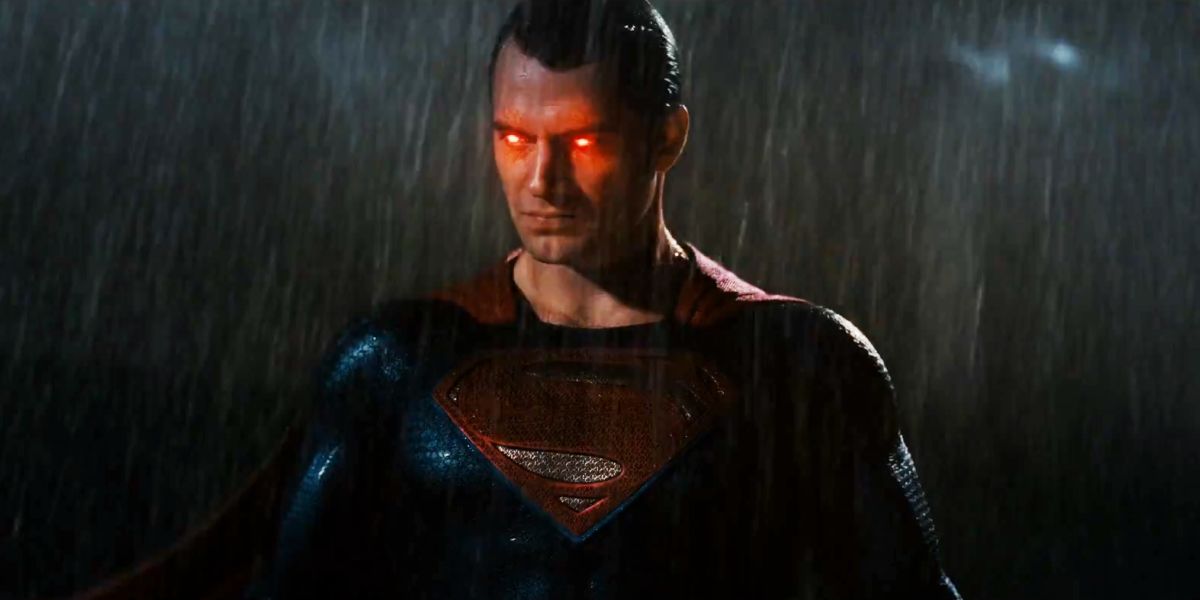
This, of course, brings us right back to the central problem of the film, which is its failure to grasp the central principles of Batman and Superman. People understand what makes these characters tick, so they would in theory make great anchors in a complex, twisty story. Strangely, though, Snyder and co. are determined to reinvent them from the ground up so that they’re barely recognizable. Henry Cavill’s Superman spends his noticeably reduced screen time being hurt, disillusioned (remember how Man of Steel told us his S-logo meant ‘Hope?’ It seems there was a mix-up in the translation and it may have just been ‘Mope.’) and being told by his loved ones – living and ghostly – to refuse the call. There’s nothing inspirational about this Kal-el. Forget setting an example for us all to follow, this version just wants to be left alone, dammit! As for Affleck’s Batman, he’s more vicious and fascistic than even Frank Miller imagined in "The Dark Knight Returns," which the movie steals liberally from. Having seemingly retired his “no kill” policy, this Caped Crusader – a famous victim of childhood gun violence – casually blasts holes in baddies with heavy-duty machine guns and leaves a trail of dead in his wake. These critical changes render the two as murky antiheroes without decipherable moral codes, transforming their compelling light versus dark relationship into an unpleasantly bleak and lumbering smackdown between grim and grimmer.

Much could be redeemed if the crucial action set pieces were exhilarating and inventive. After all, Snyder is a born stylist with a great eye, as evidenced by better films like Watchmen or 300, and even an equally clunky one like Sucker Punch. Weirdly, he really drops the ball here. Batman v Superman is shockingly sparse on superhero fighting, and what little there is surprisingly unremarkable, from an incoherent and awkwardly placed Batmobile chase to the title bout which is okay enough but hardly justifies the excessive run-time on either end of it. And the less said about the final battle the better. Suffice to say it’s a visually hideous cacophony of embarrassing effects, flimsy green-screen (the actors rarely even acknowledge each other and appear to be edited together in post) and less than dazzling fight choreography. The only time Snyder seems to come alive is in a bafflingly bizarre “Knightmare” (as it has been referred to online) sequence wherein Batman dons a duster and battles fascists and flying insect men in the desert. It’s surreal, odd and colorful, and far more in tune with the director’s past stylistic obsessions than the murky angst it's floating in. 

It goes without saying the film concludes with a blatant arrangement of pieces for the impending Justice League to run with, however it’s surprising how obligatory and devoid of energy it feels. True to its heroes, I suppose. As the first major instalment in DC’s ambitious stab at a cohesive universe, this is a woeful stumble that will require serious back-pedaling if there is any in-house desire to recapture the engaging inter-personal dynamics fans know and love from the comic books. For Dawn of Justice isn’t just dull, it’s unpleasant, numbing and nihilistic; a superhero epic that would rather spit in the face of pure-hearted heroism than embrace it. This is not the Batman/Superman movie we deserve. Or the one we need right now, thanks. 

1.5 out of 5

Saturday, January 09, 2016

The Bottom 5 Worst Films of 2015

1) FANTASTIC FOUR – Remember the dark days before the superhero movie renaissance? When comic book adaptations were visibly ashamed and resentful of their source material? And the poorly-written characters barely resembled their dynamic literary counterparts in any way, shape or form? Great hopping H.E.R.B.I.E., Fantastic Four sure does! The product of a notoriously turbulent production, Chronicle director Josh Trank’s cinematic Waterloo is a catastrophically incompetent affront to both summer blockbusters and the high standards we now measure caped hero epics against. Cheaply set mostly in two drab locations, this pathetic attempt at a franchise reboot has many of the right elements – a young It-list cast, a promising young genre-savvy helmer, a screenplay co-written by the key scribe behind X-Men: Days of Future Past – but is too embarrassingly short on confidence, smarts and vision to come anywhere close to succeeding. A true folly of its age, it should be mandatorily shown to film students as a dire warning of what can happen when you sign on to an ill-conceived studio tentpole without having gained the crucial job experience necessary to survive. Fantastic Four is so wretched, so jaw-droppingly hopeless on every conceivable level, that it semi-redeems the two earlier sub-par Jessica Alba vehicles, as well as turns the name of Marvel's First Family into a sad and ironic joke.

2) CHAPPIE – While Ex Machina dramatically pondered the scientific ethics, ramifications and wonder that could come from achieving artificial intelligence, Neill Blomkamp’s latest showed us what happens when a self-aware robot goes gangsta and gets viciously beaten with a pipe. Genius takes many forms, they say. Anyways... This major artistic setback for District 9’s once-promising helmer, a woefully confused, grating and sociopathic blend of 80s science-fiction, violent techno-thriller, parental abuse cautionary tale and Die Antwoord music video, is a triumph of technology and a total debacle of storytelling. Sharlto Copley’s titular creation, an innocent mechanical lifeform manufactured for police crowd control, is utterly convincing and sympathetic. Yet, for reasons unclear, we’re supposed to be compelled by bearing witness to the poor frightened thing being tortured, verbally abused and exploited over and over and over again ad nauseam. Chappie isn’t just a bad movie; it’s a morally reprehensible and toxic one, and enduring it is akin to spending two soul-deadening hours in a more extreme version of that creepy droid torture room from Return of the Jedi.

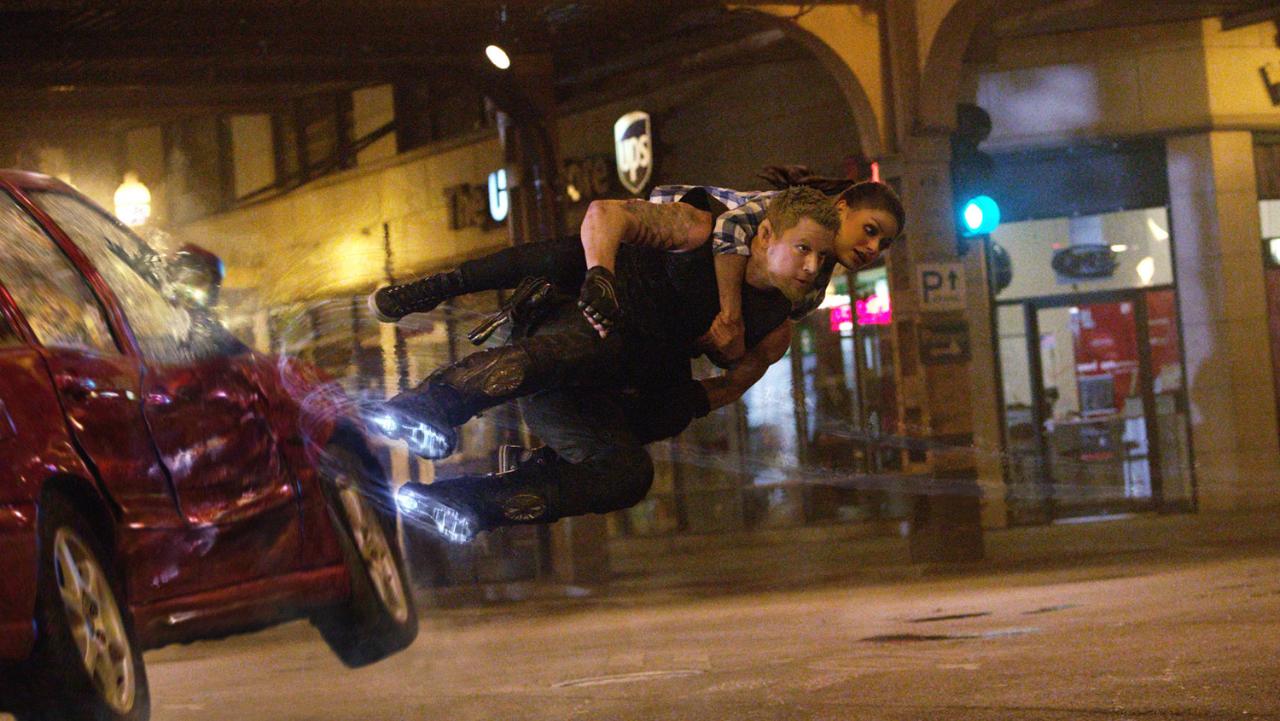
3) JUPITER ASCENDING – Back in 2012, Andy and Lana Wachowski (with Tom Tykwer) made Cloud Atlas, a hugely ambitious jumbled-timeline sci-fi opus featuring a handful of actors in heavy makeup, each playing multiple characters, in a labyrinthine story spanning 500 years. And, impossible challenge be damned, they pulled it off! So what the hell happened with Jupiter Ascending, their allegedly more straight-forward space opera headed by Channing Tatum’s sky-rollerblading, half-canine warrior and Mila Kunis’s intergalactic princess in waiting/luckless janitor?! Exploding at the seams with half-baked plot threads and poorly fleshed out ideas, this bloated mess feels like a dozen cruddy fantasy novels stuffed into one very chaotic narrative that’s long on numbing action sequences and baffling exposition, yet utterly devoid of logic, restraint or fun. It’s a real bummer to see such gifted filmmakers crash and burn so disastrously, stamping their ticket to director jail over a movie destined to be remembered for little more than a silly short-lived meme depicting Eddie Redmayne’s screeching camp overlord villain. They might as well have called the picture Careers Descending.

 4) THE BOY NEXT DOOR – Memo to J-Lo: if you’re going to go the trashy erotic thriller route, at least make sure the script is closer to Basic Instinct than Basic Instinct 2. This often snicker-inducing Fatal Attraction rip-off sees Lopez’s lonely high school lit teacher/typical mom-next-door (?!) falling prey to the unstable affections of her neighbor’s buff 'n pouty 20-something nephew (Ryan Guzman). The result? A lurid game of cheeseball leering, conservatively choreographed copulation and – dun dun dun – murder!!! For the majority of its runtime, hacky director Rob Cohen’s umpteenth clunker just sorta plods half-heartedly down a generic, greasy pathway to nowhere. Then the last act hits, and its veritable smorgasbord of barn fires, ultra-graphic eye gouges, gory body crushing and solemn Homer quotations transforms the movie, like a phoenix from the ashes, into absurdly groteque garbage art. This isn’t, of course, meant to imply The Boy Next Door is ultimately worth watching, but rather that you shouldn’t necessarily let anyone dissuade you from searching out a Greatest Hits compilation on YouTube. Or making one.
5) TERMINATOR GENISYS – In a year noticeably populated by torch-passing legacequels both stellar (Mad Max: Fury Road, Star Wars: The Force Awakens, Creed) and lousy (Jurassic World), this fifth Terminator installment was the absolute nadir of the suddenly prolific trend. Never mind that nearly-70-year-old Arnie – God bless him! – is more rust than steel, director Alan Taylor’s creatively short-circuited brand revival fumble is a tensionless, often incoherent drag, bombarding the audience with shamelessly salvaged plot elements and boring fan service in a desperate bid to feel relevant. The worst film in the beyond-exhausted series, Genisys manages to make Schwarzenegger’s wearily recycled “I’ll be back!” catchphrase officially feel like a threat to ticket-buying audiences everywhere.

Dishonorable Mentions: ALOHA, BLACKHAT, PIXELS, TAKEN 3, TOMORROWLAND