Labels

Friday, May 20, 2016

Film Review - CAPTAIN AMERICA: CIVIL WAR

The primary reason Captain America: Civil War, Marvel’s wonderfully entertaining new superhero battle royale blast, works is that no one involved actually wants to fight. Rather than merely smash these crusaders dimly against each other purely to generate CG pyrotechnics, the film recognizes these are relatable, flawed personalities who actually like and respect one another. Everyone wants to get along, so when anger-induced fallout occurs it hurts emotionally long before it does physically. And, since the storytellers visibly adore the participants, they’re more interested in clashing philosophies than shallow black and white disagreements. Our sympathies transfer back and forth throughout because there is no easy correct answers to latch onto, just well-intentioned, thoughtful people sucked up into an uncomfortably messy political situation.

Whereas previously these costumed saviors answered solely to their own moral codes and likeminded colleagues, Age of Ultron’s climactic Sokovia war, as well as an early skirmish in the (fictional) African nation of Wakanda, has changed everything. Early in Civil War the Avengers are gathered and told that, due to the massive collateral damage caused by their operations, new legal documents have been ratified which will place the group under the oversight of a United Nations committee. For Tony Stark (Robert Downey Jr., rarely better or more grounded in the role), this act helps absolve him of his own guilt, and ensures a potentially safer future for the world’s civilians. Cap (Chris Evans) disagrees. Wary of political agendas, he argues for personal responsibility and the freedom to step in when an ugly situation rears its head.

Unlike the dismal and dour Batman v Superman, which gave us a murky squabble escalated by blind hatred, distrust and zero communication, Civil War screenwriters Christopher Markus and Stephen McFeely, who penned the previous two Cap entries, cleverly use this easily defined and potentially game-changing scenario to explore the contrasting attitudes of their two leads. Whereas Steve Rogers has fought valiantly against the very worst that can transpire under administrative rule, Stark is constantly searching for a means of preventing violence before it happens even if it means making hasty decisions. This is ultimately a quarrel over peacekeeping ideology, that just so happens to be waged by two dudes in crazy outfits.

And while it may seem like Stark is the obvious villain in the equation, Cap himself also falls victim to his own vulnerabilities once former friend Bucky Barnes (Sebastian Stan, appropriately brooding), aka the deadly Winter Soldier, emerges back onto the scene. The target of a massive manhunt stemming from a horrific terrorist attack, the amnesiac assassin finds a defender in his former friend, who throws caution and accountability to the wind in order to uncover the catastrophe’s true culprit. As Stark struggles to regain control of the divided Avengers and bring his AWOL associate back into the fold, new players such as vengeful Wakandan ruler T’Challa (Chadwick Boseman) and the mysterious Zemo (Daniel Brühl) enter and turn up the heat even further. Soon, the question isn’t whether the two clashing team leaders will work out their differences, but rather whether there will even be a cohesive team left to unite by story’s end.

Not enough praise can be given to returning Winter Soldier directors Anthony and Joe Russo. They have, against all betting odds, thrillingly pulled off an extremely daunting and complicated project, stuffed with characters both established and in need of establishing, with flashy aplomb. While they may not be ultra stylish auteurs, they’ve proven among the best in the business at juggling gargantuan casts without ever forsaking memorable individual moments or arcs, no matter how slight. The fact that they succeed so astonishingly well in the often overbearing Marvel machine, especially in the wake of Joss Whedon’s oft-criticized stumbles in last summer’s similarly busy Age of Ultron, speaks volumes about their talent.

Although many will dismiss Civil War as being Avengers 2.5 in all but name, this is very much a Captain America film, buoyed by Evans’ consistently compelling and earnest performance, and featuring significant support from series regulars Barnes, Agent 13 (Emily VanCamp) and Anthony Mackie’s increasingly invaluable Falcon. And yet, as much as this quartet’s journey is the movie’s driving force, we never feel like we’re not seeing enough Iron Man, War Machine (Don Cheadle), Hawkeye (Jeremy Renner) or Black Widow (Scarlett Johansson). Ultron holdovers Vision (Paul Bettany) and Wanda Maximoff (Elizabeth Olsen) are given ample time to mature from plot devices into fleshed out figures, and Boseman’s Black Panther is a formidable, dignified presence that launches his upcoming solo adventure to the top of the must-see pile. He shares a crucial conversation with Brühl’s unexpectedly complicated antagonist that’s so well-written it’s as remarkable as (almost) all the splash page spectacle.

One can’t talk about scene stealers without mentioning Civil War’s two most powerful secret weapons: Ant-Man and Spider-Man. Paul Rudd’s pint-sized reluctant do-gooder charmed in his fun, if under-ambitious, 2015 introduction. Here, however, he’s on a whole other level, milking every second of his modest screen-time to voluble crowd-pleasing effect. His biggest moment in the spotlight is both a wonderful surprise as well as the picture’s comedic highpoint. Spidey 3.0, on the other hand, had a lot going against him after the disastrous and tarnishing Amazing Spider-Man debacles. What a difference spectacular casting and dialogue makes. Newcomer Tom Holland nails Peter Parker’s gee-whiz nerdy charisma, and he makes an ideal polar opposite to the snarky seen-it-all Stark. Plus, this Friendly Neighborhood Webslinger could not be more exhilarating to watch as he cheekily takes down unamused fellow warriors in combat.

The Russo brothers’ attention to character pays off time and time again in the go-for-broke set-pieces. Although an early scuffle with Frank Grillo’s Crossbones is undone a little by spastic camera movement and editing (and further aggravated by the lousy 3D conversion), the directorial duo more than deliver with an astonishing and frantic foot-chase through a traffic-clogged tunnel and the impactful and draining final bout between the two wounded and weary leads. The real showstopper, though, arrives at the mid-point as all of the assorted headliners throw down in a deserted German airfield. By far the best action sequence in Marvel’s cinematic history, it’s a triumph of endless fist-pumping beats, humor and inventive pair-ups. The directors understand the simple geeky pleasures of comic book fisticuffs in a way few do, and this is undeniably their masterpiece. It alone warrants the ticket price.

As much as it’s easy to gripe about the cynical nature of current franchise filmmaking practices, this picture is a testament to what it can achieve when all involved are committed, inspired and firing on all creative cylinders. This chapter is not only a top-ranking champion in the Marvel canon, alongside the first Avengers and Winter Soldier, it also serves as a serious confidence booster for the Russos’ ability to make their massive upcoming Infinity War two-parter an event worth anticipating. Even as doom 'n gloomers trumpet the horn for superhero fatigue and the eventual end of the studio’s omnipresent box-office reign, Captain America: Civil War proves that Marvel, like Cap, are still the very best at what they do and won’t be walking away any time soon.

4 out of 5

Tuesday, April 26, 2016

Film Review - THE HUNTSMAN: WINTER'S WAR

In a 21st Century Unnecessary Sequels DVD box set, The Huntsman: Winter’s War would fit comfortably just after Basic Instinct 2: Risk Addiction and Evan Almighty. Sure, it’s nowhere near as fundamentally unwatchable as those, um, films, however it is equally disposable, shoehorning only the most slight of additions into the simple mythology established by 2012’s Snow White and the Huntsman. This movie exists solely because that flick made okay money. So what if no one even really liked it! The same business strategy worked like gangbusters for Lara Croft Tomb Raider: The Cradle of Life, right?! Oh…

Honestly, who out there was left deeply yearning to learn more about Chris Hemsworth’s statuesque Thor-lite by the end of that movie? Yes, the charismatic actor was one of the very scarce bright spots in that dreary and dull modern fairy tale revival. On paper, though, Eric the Huntsman is a thinly conceived figure, short on personality and recognizable characteristics. There, he at least served a crucial plot function in escorting Snow White to her destiny. Whereas here, serving as (arguably) the lead, he’s completely upstaged by eminently magnetic returning villainess Charlize Theron and great franchise newcomers Emily Blunt and Jessica Chastain. When your central figure is a swaggering blank, it doesn’t exactly inspire much investment. Just sayin’.

Acting as both prequel and follow-up to the now foggy events of its predecessor, The Huntsman: Winter’s War (spoiler: there is no winter’s war) opens with Theron’s social climbing sociopath Ravenna assuming command of her kingdom through magic and murder. Watching from the sidelines is her fair sister Elsa Freya (Blunt), a naïve optimist carrying the child of a married man, who is abruptly driven down a similar dark path after fate turns cruelly against her. Now wielding formidable ice powers, she sets her sights on becoming a conquering warlord (“If she could not raise a child, she would raise an army,” slumming narrator Liam Neeson gravely tells us), transforming captive orphans into fearsome cannon fodder. Chief among Freya’s recruits are Eric (Hemsworth) and Merida Sara (Chastain), two top-ranking combatants whose forbidden romance draws the wrathful ire of their emotionally scarred Queen.

Flash forward seven years. Eric, now an honorable servant to Snow White (Kristen Stewart’s mute body double), is assigned to complete a dangerous recovery mission of Ravenna’s enchanted mirror, which threatens to spread doom across the land. Teaming with a duo of wise-cracking dwarves (Nick
Frost and Rob Brydon, battling valiantly with comic fool’s gold), his truncated Lord of the Rings-esque quest soon brings him into conflict with his chilly former ruler, as well as his long lost beloved.

As hollow and pointless an exercise as The Huntsman is it must be stated for the record that it's actually quite superior to the last film. Thankfully tossing off the smothering cloak of self-seriousness, Winter’s War is a much brighter and campier affair that moves at a decent clip and spends little time wallowing in its characters’ miseries. It’s the sort of nonsense B-movie fantasy epic one might catch on Netflix one boring night and think “that was actually okay!” before totally forgetting about it.

Unobtrusive director Cedric Nicolas-Troyan - taking over series duties from scandal magnet helmer Rupert Sanders - smartly lets his actors’ charisma carry the flimsy show, never letting the effects and half-baked action set pieces overwhelm (admittedly, this is perhaps a strategy motivated less by artistic intention than a reduced budget). The fantasy universe is pretty vaguely sketched in, consisting mostly of random shots of moss-covered snakes, badgers and really giddy pixies gesturing wildly, yet also kind of vanilla pleasant. There’s none of the gaudy fake green-screen atmosphere that sunk similar entries like Maleficent or Jack the Giant Slayer.

It’s utterly miraculous that The Huntsman not only managed to draw such an astonishing cast, but that said cast didn’t just phone their efforts in. After all, it would be hard to blame them with this junky and derivative material. Theron and Blunt are having an absolute ball, vamping it up with wild abandon. Although they unfortunately never quite approach Faye-Dunaway-in-Supergirl levels of hammy thespianism, they still go well above and beyond the call of duty. Likewise, Chastain makes for one darn persuasive action heroine. Clad in black leather and speaking in a Scottish brogue, the talented actress’s ass-kicking turn here inspires serious anticipation for a more deserving blockbuster star vehicle. As for Hemsworth, he’s appropriately Hemsworthian; effortlessly charming, good-humored and likeable. He swings Eric’s hand axes as ably as Thor’s mighty hammer, if not as memorably.

Since this is a movie made in 2016, it of course ends with a teaser for a dubious next chapter. This choice is especially egregious given we’ve just witnessed a clear wrap up of all the remaining story threads few really cared to see wrapped up in the first place. As a fantasy entry, The Huntsman: Winter’s War is inoffensive and cornball silly, coasting by on its fun performances and ultra-low expectations. By the time the credits roll, though, it should be abundantly clear to all but the most faithful that the studio really needs to stick an ax in this franchise, because it’s definitely done.  

2.5 out of 5

Wednesday, April 20, 2016

Film Review - THE JUNGLE BOOK

Remember when Avatar was supposed to revolutionize cinema beyond just perpetual added 3D glasses charges? James Cameron’s box-office phenomenon, hailed for its photo-real environments and digital characters, may not have been a storytelling bonanza, but it did establish exciting possibilities for the future of special effects pictures. So what happened? Aside from the anomalies that were Gravity and Life of Pi, audiences were mostly gifted with synthetic fodder like John Carter, Jupiter Ascending and The Hobbit trilogy, along with a glut of blockbusters boasting phony green-screen universes. And what seemed so special and promising in 2009, has lately been largely replaced in studio marketing materials with breathless hype for the in-camera practical methods of superstar talents like J.J. Abrams, George Miller and Christopher Nolan. CG technology is capable of birthing wondrous spectacle. Alas, all too often it only leads to wondrous eyesores.

This is why Jon Favreau’s visually sumptuous and boundary-pushing The Jungle Book is such a refreshing surprise. Sidestepping the deadly pitfalls that have doomed so many recent would-be fantasy epics, this high-tech take on Rudyard Kipling’s beloved late 19th century story collection is an absolute celebration of astonishing sights and sounds, topped off with a few scares, some laughs and plenty of heart. Kids will love it, while adults may be more than a little startled to find themselves just as invested in the magical proceedings. Take note all filmmakers aspiring to translate animated hits to live-action: this is how you do it. The bar has been set.

No doubt you could all recite the story on autopilot. It, of course, involves Mowgli (plucky newcomer Neel Sethi), a young orphan raised by wolves, who must make a perilous journey to the Man Village after drawing the murderous attention of the fearsome tiger Shere Khan (Idris Elba). Actively rallying against this forced relocation, the boy struggles stubbornly against the stern guidance of his mentor, the wise panther Bagheera (Ben Kinsgley), before being separated and left to fend for himself in the dark and dangerous wilderness. It’s during this period he meets Baloo the bear (Bill Murray), a carefree and somewhat opportunistic honey glutton, who offers a free-spirited alternative to a life of civilization. Cue the song.

As many will recall, Disney has made two major valiant efforts to tame this renowned material before. The company’s 1967 animated version – the last hand-drawn masterpiece that ol’ Uncle Walt had a significant hand in producing – is an undisputed classic, filled with wonderful songs (three of which are included here, a little too discreetly), iconic characters and some genuinely intriguing era-specific allusions regarding Mowgli’s struggle to decide between a ‘normal’ human existence and Baloo's very 60s counter-culture lifestyle choice. It’s a fantastic picture, and likely the most subtextually rich adaptation we’re likely to get.

When the company made the move to live-action for the first time in 1994, with Rudyard Kipling’s The Jungle Book, directed by The Mummy helmer Stephen Sommers, much of the innocence and quirkiness was stripped away. In its place audiences were presented with a more mature and straight-forward Tarzan narrative and plenty of wonderfully grotesque Indiana Jones-esque adventure sequences. Not a great effort by any means, yet still a diverting and occasionally thrilling one.
 
All of this is to say that Favreau, a director rarely recognized for his aesthetic daring and reliability, had a mighty big hill to climb with this third Disney take. But climb it he does! Teaming with Avatar’s brilliant effects supervisor Robert Legato, the director utilizes the same lightness of touch, character insight and talent for staging interesting action that made his work on the first two Iron Man entries so memorable. Shot entirely in a Los Angeles warehouse (!), The Jungle Book is an utterly convincing miracle of unpretentious state-of-the-art movie-making, delivering frame after frame of absolutely gorgeous and evocative imagery, as well as kinetic set-pieces that vibrate with awe and suspense. It’s rare nowadays to recommend seeing a motion picture in 3D (Good God, is it ever…). This one bucks the trend, though, and demands to be seen as it was intended in the best theatre possible. An iPad viewing won’t be a tenth as exhilarating. 

If there is a bone to be picked with The Jungle Book it’s one that also plagued the 1967 version, which is a noticeably episodic narrative. Screenwriter Justin Marks – who’s only noteworthy produced project is 2009’s infamous Street Fighter: The Legend of Chun-Li – does what he can to smooth out the story, and succeeds a fair deal more often than not. Weaving in an environmental message that feels organic to the plot (and pays off nicely), he actually, in some ways, improves on Disney’s animated milestone! Mowgli, mostly just a naïve dope there, this time shows a brightness, physicality and resourcefulness that is a lot of fun and will likely prove more engaging for young viewers looking for a protagonist to relate to. The script also adds much-appreciated detail to oft-underwritten parts like Mowgli’s adopted wolf mother Raksha (Lupita Nyong’o), and gives Shere Khan a motive that’s actually reasonably sympathetic even if he himself isn’t. The boost in screentime for these figures does, unfortunately, result in a reduced role for Scarlett Johansson’s unsettling Kaa, which is too bad but hardly a cardinal sin, and perhaps takes a beat or two away from further heightening the emotional stakes of the friendship between Mowgli and Baloo.

Generally speaking, it is often difficult not to roll one’s eyes at current day Hollywood’s chronic propensity for relying on A-list stunt-casting when it comes to animated characters. The Jungle Book is undisputedly guilty of this, however, to its credit, the majority of the actors work splendidly. Elba does a hard right turn away from George Sanders’ amusingly pompous 1967 Khan turn, offering up a baddie who exudes menace and looming violence. It’s doubtful we’ll ever see a Khan that out-terrifies this incarnation. A genius choice on paper, Murray is as good as you’d expect as Baloo, although it’s nearly impossible to improve upon Phil Harris’ legendarily acclaimed performance. Still, the actor brings the perfect amount of goofy, rough-around-the-edges charm to the celebrated bear, and plays nicely off the noble gravitas of Kingsley’s majestic kill-joy Bagheera. As King Louie, a potentially cringe-inducing Christopher Walken is anything but, unexpectedly instilling the towering ape ruler with an intimidating hardboiled New Yawk gangster attitude (trust me, it works).

It’s honestly more than a little astounding how legitimately engaging and creatively inspired this movie is, especially following in the wake of the oddly hollow Alice in Wonderland, the crummy Maleficent and the lovely-yet-forgettable Cinderella. Favreau and his team have crafted a surefire entertainment for all ages that’s immersive, rousing and enthusiastically stimulates the imagination, as opposed to pounding it into submission with dull-witted noise and fury. By mashing up the enduring whimsical spirit of Rudyard Kipling’s tales with next level craftsmanship, The Jungle Book takes you on a heck of a ride so long as you, to paraphrase Kaa, trussssst in it.

4 out of 5

Friday, April 15, 2016

Film Review - HARDCORE HENRY

Hardcore Henry is a relentless and obscene assault on the senses disguised as a motion picture. Aspiring to be no more than a ninety minute onslaught of blood, guts, fire, bullets and ballistics, Russian music video director Ilya Naishuller’s exhausting, punishing debut is the most literal cinematic replication of ultraviolent first-person shooter video game aesthetics ever conceived. It’s also a virtuoso marvel of technique and directorial control, albeit one that leaves you reaching for headache meds when it’s over. 

Set at an undetermined point in the not-so-distant future, Hardcore Henry opens with the title character being awoken by his scientist wife Estelle (Haley Bennett, who bears a jarring resemblance to Jennifer Lawrence) from a comatose state. Hooked up to machines, mute, without any memory and missing multiple limbs, our hero is speedily outfitted with synthetic replacement parts and brought up to speed. He was once a soldier, but has been transformed post-mortem into a high-tech killing machine. However, before he’s even able to receive his new electronic voice, the lab is crashed by Akan (Danila Kozlovsky), a telekinetic psychopath with a blond emo haircut, who quickly absconds away with our confused protagonist’s beloved. Hell-bent to get her back, Henry must mow his way through an endless (extremely heavy emphasis on that word) assortment of armed goons using every deadly weapon at his disposal, with aid coming only from a mysterious ally named Jimmy (Sharlto Copley), who has secret information to share and a very nasty habit of dying hard and often.

To his great credit, director Naishuller, who gained international attention for his popular POV music video “Biting Nails: Bad Mother****er,” is not only 100-percent committed to his visual storytelling gimmick, but also astonishingly skilled at realizing it. Employing an army of seemingly reckless stunt men, he stages his countless chaotic action sequences with explosive aplomb, never losing track of the geography of the scene or leaving the audience disoriented. While perhaps a questionable artistic aim, this is likely as close to capturing the “you are here” virtual reality feel of a particularly ferocious first person shooter game as any filmmaker can ever dare dream. Remember that brief much-celebrated POV bit in 2005’s cruddy Doom adaptation? That was a glitch-ridden beta test compared to this sleekly-tooled flick. As the camera whips around like a whirling dervish, Henry’s tattooed gun-toting hands visible at the bottom of the screen, we act as both observers and simulated players, steering the lead mercilessly through his gauntlet of carnage.

There’s zero doubt gamers will greatly appreciate the movie's slavish dedication to their preferred medium (especially given the endless horror parade of unwatchable video game flicks to date), and the film warrants commendation for never condescending to this niche audience. But what about non-gamers just interested in a fun time at the theater? To be honest, Hardcore Henry probably won’t work out so well for them, as it refuses to make any concessions for those yearning for a little story or an interesting character or two within its whirling cesspool of gore, brutality and rampant, mean-spirited misogyny.

Hardcore Henry is, in many ways, the logical continuation of what maverick directorial duo Neveldine/Taylor pioneered with their go for broke Crank entries and Gamer. However, those films showed at least a modicum of interest in plotting and character, no matter how scattered or silly. Naishuller’s vicious blast-o-rama, on the flip side, is just an extremely long action scene broken up by sporadic connect-the-dot exposition bursts that amount to pretty much zilch anyway. My friend Tony would call this an 'And Then' movie, because the entire narrative can be accurately summed up by a hyper-active child yelling “And then [blank] happened, and then [blank], and then [blank], and then [blank]…,” ad nauseum.

Since we never remotely care at all about anyone of anything that’s happening on-screen, it’s nearly impossible to maintain any sort of interest or enthusiasm by the time we get to the hundredth decimated generic enemy. And whereas the two Cranks were at least grounded by an amusing central performance by Jason Statham, Hardcore Henry lacks a strong magnetic personality to anchor the madness. Copley is ostensibly there to perform that task, yet Jimmy’s many incarnations are so frenzied and over-mannered that they often manage to out-loco the madness around them. At least the District 9 actor is having a grand old time with his one-dimensional role (especially in a jaw-dropping late-second act scene that no one will see coming), even if he does spend far, far too much time hysterically screaming incoherent nonsense into the camera.

No doubt you already knew a few paragraphs ago whether this one was for you or not. Well, that’s just the kind of movie Hardcore Henry is; you’re either on board to experience its concussive Molotov cocktail of tasteless sadism and mayhem, or you’re not. As a technical experiment, Naishuller’s accomplished spectacle is at least an intriguing and dazzling exercise in superficial style, even if it fast becomes a tedious endurance test to finish. Hopefully the talented young helmer’s next film sees him melding his skill for eye-popping images with a decent narrative backbone, as maybe then all the splatter might actually, you know, matter.

2 out of 5

Thursday, March 31, 2016

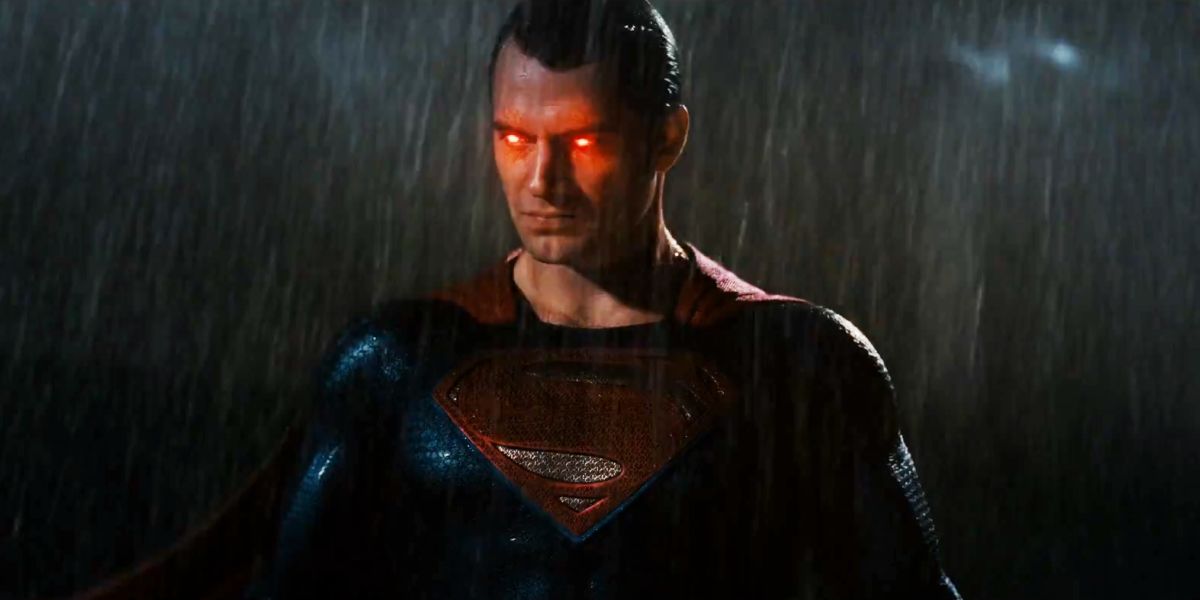
Film Review - BATMAN V SUPERMAN: DAWN OF JUSTICE

There are a lot of crippling issues plaguing Zack Snyder’s laboriously titled Batman v Superman: Dawn of Justice, but its most damning misstep is also its most obvious, which is that this film doesn’t understand Batman, nor Superman. Given the well-honed crime-fighting ideologies of each hero, refined over 75-plus years of storytelling, there’s actually a very clear and compelling yin/yang motive for a potential clash between these titans. Whereas God-like Superman, an immigrant welcomed with open arms to our planet, represents the greatest of mankind’s optimism and belief in kindness, the very mortal Batman acts out of pessimism. Birthed from a horrific crime, Gotham’s dark knight is driven by an obsessive need to shield the public from the destructive human behavior that has cursed his own life. While each shares a common goal to maintain order, their perceived end games and methodology are very different, and could inspire a fascinating examination of their dueling philosophies and crime-fighting aspirations.

Sadly, Batman v Superman ain’t that movie. At all. This is an ugly, mean-spirited slog, built on a shaky Kryptonite foundation of clumsy franchise-building, that strips each hero of nuance and majesty, leaving only seething, posturing action figures waging a destructive campaign of intolerance against one another. It’s an interesting counter-approach to Marvel’s output, where courage and self-sacrifice is to be championed, and can be found within anyone. The cinematic DC universe seems to feel the role of protector of mankind is an irritating, exhausting chore forced upon angry, miserable brutes with mommy issues. Is this really a message worth running with? 

Let’s not get ahead ourselves, though. As the film opens we witness Bruce Wayne (Ben Affleck – a genuine casting home run) rushing into a collapsing Metropolis during Superman’s catastrophic final Man of Steel battle with General Zod. Pulling hurt civilians from the rubble, and barreling headlong through clouds of dust, ash and debris, he casts his gaze upwards at the almighty fury raging above and glares wrathfully. It’s a fantastic early sequence, establishing a clear motive for the titular conflict, and exemplifies the very bravery that makes the Wayne we know and love who it is. Sadly, the movie doesn’t seem to realize that.

Enter Jesse Eisenberg’s erratic, way off-model Lex Luthor. Determined to declare war on both avengers for dubious reasons we’ll get into later, he initially sets out to sully Superman’s name and influence the world to cast him out as a devil. He also yearns to get his hands on a certain precious glowing green alien rock, which will act as both a weapon against his oblivious foe, and as a key ingredient in a larger, more insane plan. Drawing a resentful and unhinged Batman into these sinister machinations, he kick-starts a feud between the stubborn men which threatens to destroy both the city and the potential for further sequels (no such luck!).

To be clear; this is not a concise, well thought out tale director Zack Snyder and writers Chris Terrio (Argo) and David S. Goyer (Man of Steel, Blade) are telling. Batman v Superman suffers from the same brand of messy, momentum-killing bloat that dragged down costly disasters like Amazing Spider-Man 2Transformers: Age of Extinction and Tron Legacy. Mistaking a dour, meandering stew of endless sub-plots for story, the film feels like it's running in a dozen different directions at once without any clear objective in sight. The first half feels overstuffed with happenings, as we follow the two leads’ various escapades, as well as Lois Lane’s (Amy Adams) investigation into high-tech bullets, Lex’s scheming, Alfred the butler’s (a brilliantly cast Jeremy Irons) frustrated handwringing, unconnected Justice League tie-in dream sequences and material involving a conflicted senator played by an unfortunately wasted Holly Hunter. Oh, and Wonder Woman! Yes, Gal Godot’s likable lasso-twirling heroine drifts in and out of proceedings, usually sans dialogue, like a visitor from another movie (don’t worry, hopefully someone will write her as an actual character in her upcoming solo adventure).               

All of these threads prove far too much for the filmmakers to handle, and it’s not long before motivations go out the window. In a picture this densely packed with incident, it’s tough to clearly communicate to the audience exactly what each character is trying to achieve, why it matters and keep it consistent through an ever-evolving narrative. It’s an unflashy skill, but an invaluable one in long grandiose blockbusters like this. Christopher Nolan proved extremely adept at this feat in his Dark Knight trilogy, for example, however examine a dud like Pirates of the Caribbean: At World’s End where everyone seems to act purely out of frenzied impulse. The results here mirror the latter and feel utterly chaotic, with no one’s behavior tracking scene-to-scene, thus killing off our ability to invest in what we’re experiencing. It’s an exercise in pure futility to sit through Dawn of Justice and logically explain how Lex Luthor’s early plans give way to the absurd conclusion in which a terrible-looking CG blob (Warner Bros. didn’t learn many lessons from Green Lantern, it would seem) rampages through the streets. By contrast, the on-screen journeys of Mr. Freeze and Poison Ivy in Batman & Robin at least make sense on paper!

This, of course, brings us right back to the central problem of the film, which is its failure to grasp the central principles of Batman and Superman. People understand what makes these characters tick, so they would in theory make great anchors in a complex, twisty story. Strangely, though, Snyder and co. are determined to reinvent them from the ground up so that they’re barely recognizable. Henry Cavill’s Superman spends his noticeably reduced screen time being hurt, disillusioned (remember how Man of Steel told us his S-logo meant ‘Hope?’ It seems there was a mix-up in the translation and it may have just been ‘Mope.’) and being told by his loved ones – living and ghostly – to refuse the call. There’s nothing inspirational about this Kal-el. Forget setting an example for us all to follow, this version just wants to be left alone, dammit! As for Affleck’s Batman, he’s more vicious and fascistic than even Frank Miller imagined in "The Dark Knight Returns," which the movie steals liberally from. Having seemingly retired his “no kill” policy, this Caped Crusader – a famous victim of childhood gun violence – casually blasts holes in baddies with heavy-duty machine guns and leaves a trail of dead in his wake. These critical changes render the two as murky antiheroes without decipherable moral codes, transforming their compelling light versus dark relationship into an unpleasantly bleak and lumbering smackdown between grim and grimmer.

Much could be redeemed if the crucial action set pieces were exhilarating and inventive. After all, Snyder is a born stylist with a great eye, as evidenced by better films like Watchmen or 300, and even an equally clunky one like Sucker Punch. Weirdly, he really drops the ball here. Batman v Superman is shockingly sparse on superhero fighting, and what little there is surprisingly unremarkable, from an incoherent and awkwardly placed Batmobile chase to the title bout which is okay enough but hardly justifies the excessive run-time on either end of it. And the less said about the final battle the better. Suffice to say it’s a visually hideous cacophony of embarrassing effects, flimsy green-screen (the actors rarely even acknowledge each other and appear to be edited together in post) and less than dazzling fight choreography. The only time Snyder seems to come alive is in a bafflingly bizarre “Knightmare” (as it has been referred to online) sequence wherein Batman dons a duster and battles fascists and flying insect men in the desert. It’s surreal, odd and colorful, and far more in tune with the director’s past stylistic obsessions than the murky angst it's floating in. 

It goes without saying the film concludes with a blatant arrangement of pieces for the impending Justice League to run with, however it’s surprising how obligatory and devoid of energy it feels. True to its heroes, I suppose. As the first major instalment in DC’s ambitious stab at a cohesive universe, this is a woeful stumble that will require serious back-pedaling if there is any in-house desire to recapture the engaging inter-personal dynamics fans know and love from the comic books. For Dawn of Justice isn’t just dull, it’s unpleasant, numbing and nihilistic; a superhero epic that would rather spit in the face of pure-hearted heroism than embrace it. This is not the Batman/Superman movie we deserve. Or the one we need right now, thanks. 

1.5 out of 5

Saturday, January 09, 2016

The Bottom 5 Worst Films of 2015

1) FANTASTIC FOUR – Remember the dark days before the superhero movie renaissance? When comic book adaptations were visibly ashamed and resentful of their source material? And the poorly-written characters barely resembled their dynamic literary counterparts in any way, shape or form? Great hopping H.E.R.B.I.E., Fantastic Four sure does! The product of a notoriously turbulent production, Chronicle director Josh Trank’s cinematic Waterloo is a catastrophically incompetent affront to both summer blockbusters and the high standards we now measure caped hero epics against. Cheaply set mostly in two drab locations, this pathetic attempt at a franchise reboot has many of the right elements – a young It-list cast, a promising young genre-savvy helmer, a screenplay co-written by the key scribe behind X-Men: Days of Future Past – but is too embarrassingly short on confidence, smarts and vision to come anywhere close to succeeding. A true folly of its age, it should be mandatorily shown to film students as a dire warning of what can happen when you sign on to an ill-conceived studio tentpole without having gained the crucial job experience necessary to survive. Fantastic Four is so wretched, so jaw-droppingly hopeless on every conceivable level, that it semi-redeems the two earlier sub-par Jessica Alba vehicles, as well as turns the name of Marvel's First Family into a sad and ironic joke.

2) CHAPPIE – While Ex Machina dramatically pondered the scientific ethics, ramifications and wonder that could come from achieving artificial intelligence, Neill Blomkamp’s latest showed us what happens when a self-aware robot goes gangsta and gets viciously beaten with a pipe. Genius takes many forms, they say. Anyways... This major artistic setback for District 9’s once-promising helmer, a woefully confused, grating and sociopathic blend of 80s science-fiction, violent techno-thriller, parental abuse cautionary tale and Die Antwoord music video, is a triumph of technology and a total debacle of storytelling. Sharlto Copley’s titular creation, an innocent mechanical lifeform manufactured for police crowd control, is utterly convincing and sympathetic. Yet, for reasons unclear, we’re supposed to be compelled by bearing witness to the poor frightened thing being tortured, verbally abused and exploited over and over and over again ad nauseam. Chappie isn’t just a bad movie; it’s a morally reprehensible and toxic one, and enduring it is akin to spending two soul-deadening hours in a more extreme version of that creepy droid torture room from Return of the Jedi.

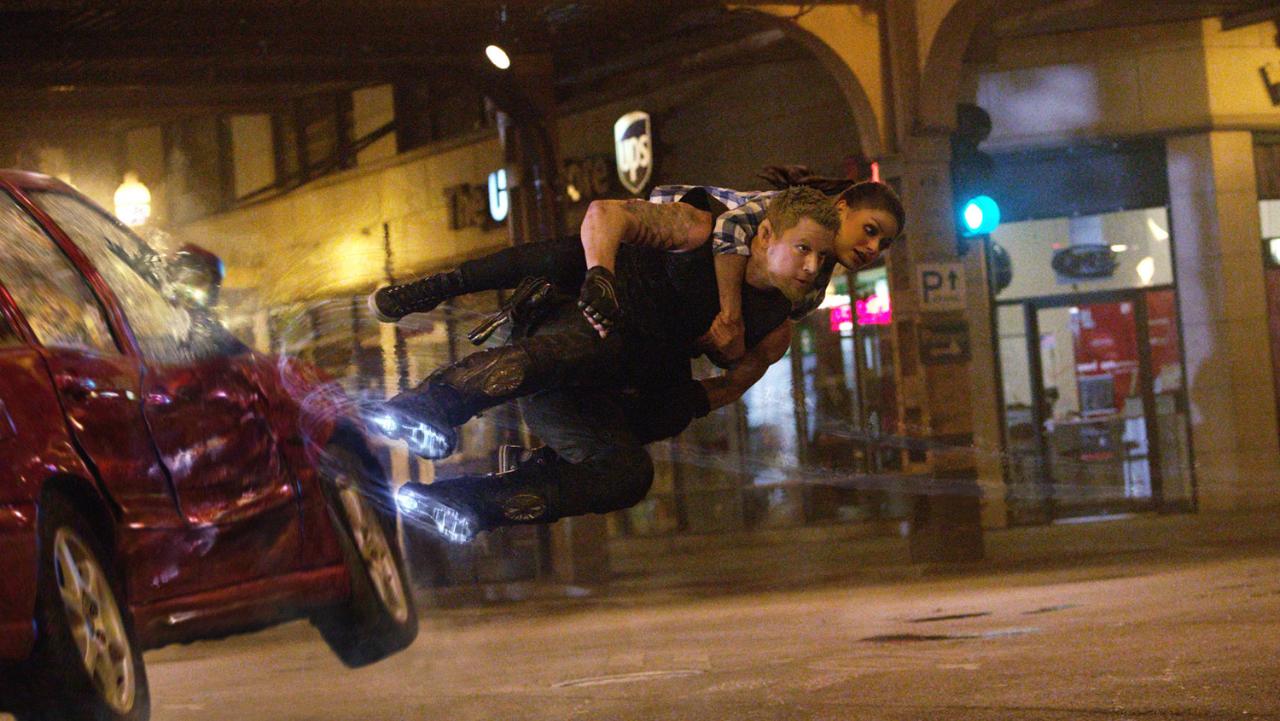
3) JUPITER ASCENDING – Back in 2012, Andy and Lana Wachowski (with Tom Tykwer) made Cloud Atlas, a hugely ambitious jumbled-timeline sci-fi opus featuring a handful of actors in heavy makeup, each playing multiple characters, in a labyrinthine story spanning 500 years. And, impossible challenge be damned, they pulled it off! So what the hell happened with Jupiter Ascending, their allegedly more straight-forward space opera headed by Channing Tatum’s sky-rollerblading, half-canine warrior and Mila Kunis’s intergalactic princess in waiting/luckless janitor?! Exploding at the seams with half-baked plot threads and poorly fleshed out ideas, this bloated mess feels like a dozen cruddy fantasy novels stuffed into one very chaotic narrative that’s long on numbing action sequences and baffling exposition, yet utterly devoid of logic, restraint or fun. It’s a real bummer to see such gifted filmmakers crash and burn so disastrously, stamping their ticket to director jail over a movie destined to be remembered for little more than a silly short-lived meme depicting Eddie Redmayne’s screeching camp overlord villain. They might as well have called the picture Careers Descending.

 4) THE BOY NEXT DOOR – Memo to J-Lo: if you’re going to go the trashy erotic thriller route, at least make sure the script is closer to Basic Instinct than Basic Instinct 2. This often snicker-inducing Fatal Attraction rip-off sees Lopez’s lonely high school lit teacher/typical mom-next-door (?!) falling prey to the unstable affections of her neighbor’s buff 'n pouty 20-something nephew (Ryan Guzman). The result? A lurid game of cheeseball leering, conservatively choreographed copulation and – dun dun dun – murder!!! For the majority of its runtime, hacky director Rob Cohen’s umpteenth clunker just sorta plods half-heartedly down a generic, greasy pathway to nowhere. Then the last act hits, and its veritable smorgasbord of barn fires, ultra-graphic eye gouges, gory body crushing and solemn Homer quotations transforms the movie, like a phoenix from the ashes, into absurdly groteque garbage art. This isn’t, of course, meant to imply The Boy Next Door is ultimately worth watching, but rather that you shouldn’t necessarily let anyone dissuade you from searching out a Greatest Hits compilation on YouTube. Or making one.
5) TERMINATOR GENISYS – In a year noticeably populated by torch-passing legacequels both stellar (Mad Max: Fury Road, Star Wars: The Force Awakens, Creed) and lousy (Jurassic World), this fifth Terminator installment was the absolute nadir of the suddenly prolific trend. Never mind that nearly-70-year-old Arnie – God bless him! – is more rust than steel, director Alan Taylor’s creatively short-circuited brand revival fumble is a tensionless, often incoherent drag, bombarding the audience with shamelessly salvaged plot elements and boring fan service in a desperate bid to feel relevant. The worst film in the beyond-exhausted series, Genisys manages to make Schwarzenegger’s wearily recycled “I’ll be back!” catchphrase officially feel like a threat to ticket-buying audiences everywhere.

Dishonorable Mentions: ALOHA, BLACKHAT, PIXELS, TAKEN 3, TOMORROWLAND

Wednesday, January 06, 2016

The Top 10 Best Films of 2015

1) MAD MAX: FURY ROAD – Prior to the release of George Miller’s fourth post-apocalyptic explodaganza, there were plenty of reasons to be nervous. In the wake of the Star Wars prequels, Indiana Jones and the Kingdom of the Crystal Skull and Prometheus, it was hard to be confident in the theoretically exciting prospect of a genre visionary revisiting his fictional universe after decades away. But we were wrong to doubt the ingenious Australian auteur. Dead wrong. Fury Road is the epitome of pure cinema in 2015; a blistering and rip-roaring breakneck assault that made the majority of big budget entertainments look low on gas by comparison. An endlessly innovative fever dream of classically constructed action chaos, flawlessly immersive world-building, next-level craftsmanship and timely social commentary, Miller’s masterpiece dynamically re-emphasizes his distinguished status as one of the premier visual storytellers of our time. Gorgeously shot by veteran director of photography John Seale (nearly every wondrous frame is suitable for wall hanging), edited to machine-tooled perfection by Margaret Sixel and vigorously grounded by instantly iconic headliners Tom Hardy and Charlize Theron, Mad Max’s latest scorch-the-earth spectacular acts as a defiant sign post to the next generation of aspiring blockbuster helmers: “Get on your game or get off the road!”

 2) THE HATEFUL EIGHT – Bless the movie gods for Quentin Tarantino! Precious few filmmakers are capable of not only exceeding lofty expectations, but doing so nearly every time at bat. Storming theatres like a stallion stampede from hell, the celebrated director’s meanest and most politically provocative effort to date is a relentlessly cruel Agatha-Christie-gone-blood-simple chamber room mystery ablaze in monstrous male masculinity and post-Civil War hostility, misogyny and racism. Working with a legendary assembly of actors, including Kurt Russell, Jennifer Jason Leigh, Walton Goggins, Tim Roth and go-to muse Samuel L. Jackson, Tarantino delivers another unforgettable yarn - this time flavored with liberal homages to Leone and Carpenter (with a pinch of classic Raimi) - boasting plenty of characteristic swaths of hyper-quotable dialogue, comically gruesome splatter and sly meta-commentary on storytelling and performance. Where this effort really separates itself from the rest of the auteur’s combustible canon, however, is in its anger. Unlike Django Unchained or Inglourious Basterds – where brutal violence was employed in order to achieve catharsis for historical atrocities – The Hateful Eight sees the helmer using ugly 19th century intolerance as a smokescreen in order to uncomfortably set his sights squarely on present day injustices. And, over the course of almost three exhilarating hours, his finger rarely ever relaxes on the trigger.

3) EX MACHINA – After spending over a decade penning clever sci-fi scripts for geniuses like Danny Boyle (28 Days Later, Sunshine) and Mark Romanek (Never Let Me Go), screenwriter Alex Garland finally took over the director’s chair and proved a force to be reckoned with. Starring Oscar Isaac as a calculating and reclusive alpha-nerd genius intent on proving the infallibility of his breathtaking new A.I. experiment (Alica Vikander) to Domhnall Gleeson’s insecure underling programmer, Ex Machina is a hypnotically chilly, smart and precise exercise in tension and heady big idea concepts. Upon first viewing, the picture is a dazzling, unsettling and brilliantly acted thriller that pulls the rug right out from under you. But subsequent viewings provide the richer experience, as the film’s thematic explorations of gender, artificial life, scientific ethics and modern technology-induced isolation come more and more into focus. And if that’s not enough of a sell, it also boasts bar none the most bitching dance-floor boogie session in ages.

 4) STEVE JOBS – Equal parts Birdman and The Social Network, director Danny Boyle and writer Aaron Sorkin’s entrancing and unconventional biopic of the polarizing deceased Apple co-founder is a scintillating showcase of crackerjack dialogue and captivating personalities. Told in three distinct acts, in which Jobs (Michael Fassbender, wonderful as always) preps in real time for a trio of major product launches, the film builds to one fireworks-laden crescendo after another as Sorkin bounces his collection of exceedingly smart real world personalities off one-another to increasingly eruptive effect. Boyle, utilizing his considerable theatre-directing experience and toning down the trademark stylistic quirks, creates a tense, animated environment for his assembly of A-grade talent – Kate Winslet, Seth Rogen, Jeff Daniels, Michael Stuhlbarg and Katherine Waterston – to play in and skillfully captures each of their volatile encounters with raw, keenly observed authenticity. Steve Jobs undeniably plays fast and loose with chronology and facts, but ultimately in the service of creating a rewarding, uncompromising and complicated look at the man, his ego, his intellect and, ultimately, his legacy.

5) BROOKLYN – We all go to the movies for different reasons. Sometimes we wish to be wowed by state of the art visuals, or strange new places. Or to laugh, cry or be scared senseless. Other times we just want to watch a film that makes us feel good inside, and there was no picture last year warmer or more irresistibly charming than Brooklyn. Helmer John Crowley and screenwriter Nick Hornby’s adaptation of author Colm Tóibín’s sweet-natured immigrant tale, which follows a sheltered Irish girl (Saoirse Ronan) as she transitions from homey small town security to intimidating 1950s New York big city life, was an enchanting, funny and unabashedly romantic sleeper gem. Surprisingly suspenseful in its own low-key way - courtesy of an involving and difficult central love triangle involving potential suitors Emory Cohen and Domhnall Gleeson – Brooklyn is an unflashy triumph about good, interesting people aspiring to achieve love, meaning and a place to call home.

 6) STAR WARS: THE FORCE AWAKENS – As remarkable as all of the titles on this list are, when all is said and done it’s fairly certain 2015 will go down in the books as the year Star Wars victoriously reasserted its reign of pop-culture dominance. And - you know something? - it’s hard to be pessimistic about the franchise’s impending prolificacy after being swept up in J.J. Abrams’ high-spirited and lovingly rendered series restart. Handed an almost unwinnable battle, the ever-resourceful director proves uncannily adept at balancing the old with the new, hitting all the right nostalgic buttons while opening up the galaxy to an infinite future of rousing edge-of-your-seat adventures. While The Force Awakens isn’t necessarily a great film, as the 1977 original and The Empire Strikes Back were, it’s a top-flight entertainment and – most importantly – a great Star Wars film that introduces compelling new elements and characters (Rey and Kylo Ren, in particular) that leave you urgently yearning to punch the hyperdrive to 2017 for the next breathless chapter.

7) SPOTLIGHT – As evidenced by past successes The Station Agent, The Visitor and Win Win writer-director Tom McCarthy has long been fascinated by unlikely makeshift family units and what makes them tick. This obsession carries over into Spotlight, his spellbinding fact-based account of the Boston Globe’s shocking 2001 investigation into the Catholic Church’s child molestation cover-up, which taps into the infectious pulse of the newsroom, and the diverse workaholic personalities working within it, with the electric immediacy of a modern day All the President’s Men. A true marvel of fly-on-the-wall, ensemble-driven dramatic storytelling, McCarthy’s latest is a mesmerizing procedural, skillfully carried by a top-notch cast featuring Michael Keaton, Mark Ruffalo, Rachel McAdams, Liev Schreiber and John Slattery. More importantly, though, it’s also a frustrated, damning indictment of a corrupt and broken institution responsible for committing irreparable damage to countless innocent young lives.

 8) ROOM – Like a tiny beacon of light in a sea of darkness, Lenny Abrahamson’s engrossing Room is an affecting tale of hope and perseverance in the most bleak and crushing of circumstances. When first we meet Brie Larson’s tortured protagonist, she’s been raising her five-year-old son (Jacob Tremblay) in captivity for years after being abducted and imprisoned as a teenager by a sadistic rapist. However, rather than simply wallow in misery, the film finds boundless inspiration in her enduring strength and unwavering resolve to protect her son – a goal further complicated after they gain freedom and must navigate a world he’s never been exposed to and she’s long become distanced from. Larson, who has never been better – which is pretty incredible after her towering turn in 2013’s Short Term 12 – is revelatory, as is her young co-star, whose inquisitive naivety and optimism proves their eventual salvation. Don’t let the grimness of the subject matter dissuade you, Room is a stirring and poignant testament to the unconquerable human spirit.

9) AMY – This astonishingly well-researched and chronicled documentary on the tragic short life of English singer Amy Winehouse is the most haunting picture of 2015. Utilizing a seemingly limitless library of invaluable audio and video recordings, director Asif Kapadia paints an unprecedentedly intimate and detailed portrait of the tormented young musician; one that alternately serves as an emotionally devastating tribute to her incredible gifts, and a wrenching, infuriating condemnation of the toxic personalities, exploitative industry and sadistic celebrity culture that ultimately dragged her down. While Winehouse’s over-simplified “Behind the Music” rise and fall narrative is well known, and still relatively fresh in our memories, Kapadia’s loving eulogy mourns a complex and vibrant young woman, whose spiral into the demon-fueled abyss was only accelerated by the lack of compassionate helping hands willing to reach in to offer assistance.

10) THE WALK – On paper, Robert Zemeckis’s impressive high-tech retelling of performance artist Philippe Petit’s audacious and obscenely dangerous 1974 high-wire journey between the World Trade Center towers seemed like a truly terrible idea. After all, how do you match the dramatic power of James Marsh’s 2008 Oscar-winning documentary Man on Wire, which already thoroughly covered the entire madcap quest beat-by-beat? The answer: by doing something different. Instead, the ingenious director lovingly crafted a romantic and exuberant celebration of art, life and human ingenuity, dressed up in propulsive heist movie conventions and populated by a team of fun oddballs (headed by a truly committed Joseph Gordon-Levitt), that climaxes in a beyond beautiful big screen spectacle that’s both deeply moving and magically awe-inducing.

Honorable Mentions: BEASTS OF NO NATION, BRIDGE OF SPIES, CREED, SPECTRE, WILD TALES

Tuesday, March 10, 2015

Film Review - CHAPPIE

It takes genuine, unfettered talent to produce an experience as depressingly unpleasant and ugly as Chappie. Whereas a studio hack might manage to crank out an ill-conceived, forgettable mess that mirrors this picture’s traffic jam of ideas and themes, only a talent as bright and promising as Neill Blomkamp is capable of dragging you into the chaos and provoking strong, repulsed emotional reactions. This is a sad case study of creative genius gone horribly awry, resulting in a punishing exercise in hubris that cockily swaggers across the line separating bad from flat out offensive.

How did we even wind up here? Back in 2009 when District 9 hit, Blomkamp seemed like an exciting powerhouse on the rise. Sure, there were warning signs of the writer/director’s action-over-thoughtfulness leanings present in that Oscar-nominated best picture contender, but his dedication to hard sci-fi trappings, grounded and intense fantastic imagery and technical virtuosity felt so fresh and invigorating. And while 2013’s bumpily scripted Elysium fell short of lofty expectations, there was nonetheless a lot to admire in the scrappy, Verhoeven-inspired crazed social commentary and hyper-violence.

Perhaps Chappie, Blomkamp’s unnecessarily aggressive artificial intelligence fairy tale, is just a natural evolution of his increasingly problematic screenwriting shortcomings and intense style-over-substance attitude. Success and diminished outside authoritarian influence has certainly created many a monster (take a bow George Lucas and M. Knight!) in the past, after all. It’s just unfortunate there weren’t more highlights along the journey to this dire point.

The latest chapter in the helmer’s futuristic Johannesburg series (it would be nice to say final, however talk of a District 10 have recently started anew), Chappie again returns us to the dusty, despairing streets and crumbling dystopian urban decay of the large South African metropolis, where punky criminals battle it out in the streets and law enforcement depends solely on superior firepower. Fortunate, then, that weapons manufacturer Tetravaal has recently sold a line of shoot-first-ask-questions-later armored robots to the police department in an effort to subdue the explosion of anarchy. Designed by Deon Wilson (Dev Patel), these mechanized peacekeepers prove exceedingly efficient in the war on crime, much to the chagrin of the increasingly frantic criminal population, as well as the young inventor’s unstable robotics engineer colleague Vincent Moore (Hugh Jackman), who vehemently opposes the concept of justice being decided by machine minds.

After a late night energy drink-driven development session, Deon finally cracks the code for complete artificial intelligence. Yet, despite his insanely profitable achievements, Tetravaal’s business-minded CEO (Sigourney Weaver) sternly guns down his hopes to develop a prototype ‘bot able to think and express itself, forcing him to conduct the experiment on the sly with pilfered parts. Alas, on his commute home he’s nabbed by a street gang (headed by the South African rave-rappers Ninja and Yolandi Visser of Die Antwoord fame), who demand the robot be activated and surrendered to them. Once the switch is flicked on the bucket of bolts, Chappie (Sharlto Copley) is born; an innocent, impressionable construct who observes life through timid digital eyes. Forced to mature rapidly in a pitilessly rough and merciless environment, the newborn first-of-his-kind fast finds himself torn between the intelligent, compassionate ideals of his maker and the nihilistic, felonious attitudes of his adoptive parents. With only a five-day lifespan, our hero soon becomes determined to extend his mortality, even as Moore plots to cut it even shorter by initiating his own hulking man-driven weapon of unstoppable mass destruction.

As a work of special effects blended with performance, Chappie himself is utterly convincing. Photo-real, expressive and moving with recognizable weight and authentic clunkiness, he’s an instantly iconic character who quickly grabs our sympathy and affection. Which, strangely, becomes a serious issue and fundamentally breaks the movie before it even really gets going.

From the get go, we’re told that this robot, metal frame aside, is a child; vulnerable, helpless and without understanding of the world around him. Immediately upon activation, he cowers in fright behind furniture and has to be gently coaxed out by Deon and Yolandi (this doesn’t really make sense logically, but whatever). Given this presentation, it boggles the mind why Blomkamp feels so compelled to relentlessly mistreat this character, beating the audience into submission with each successive scene of Chappie being verbally harassed, smashed with pipes, fire-bombed and – in a scene so wretchedly cruel it’s bizarre – being dragged terrified into a van and viciously tortured. There’s an exploitative lingering mean-spiritedness to the film that’s troubling, as if viewing non-stop torment will inspire us to cheer harder for the protagonist. It doesn’t. Unlike his spiritual ancestor Pinocchio, we never witness the moments of true love and warmth that see him through the darkness. This is that famous tale filtered through the warped sensibilities of that kid who dismembered action figures in Toy Story.

 If Chappie is an ill-used conceptual triumph, the humans are a total lost cause. Patel exudes earnestness and intellectualism, but Deon is another one of those silver screen scientific wunderkinds who only make stupid decisions, while Jackman spends his hammy minimal screen-time glowering over his cubical wall, viewing events taking place mere feet away through binoculars and, most memorably, holding a gun to a coworker’s head in a crowded office with zero repercussions. As for Die Antwoord, they make credibly unsavory, obnoxious abusive movie parents you can’t wait to see eliminated. Too bad we’re actually supposed to root for them.

Blomkamp reliably brings no shortage of characteristic visual flare to the picture (he can make even irredeemable junk like this look fantastic). As a writer, though, he’s scattered in a thousand directions like a cluster bomb. Sharing duties with District 9 collaborator Teri Tatchell, he seems unclear what his movie is even about. The science is introduced as being realistic, yet quickly becomes absurd (“uploading consciousness.dat”), and there’s not much interest in seriously exploring themes of artificial intelligence, mortality or nature vs nurture. Instead, characters bluntly verbalize awkward messages as the film noisily shifts gears like an out of control freight train. Maybe the director sensed there were issues, given his reliance on ripping off now classic plot elements from his debut. Hey, it worked the first time, right?!

As awful as this disaster is, though, there’s still reason to believe Blomkamp can deliver the goods. Many A-list directors have stumbled badly after capturing greatness and achieving unprecedented power. Spielberg had his 1941, Ridley Scott made Legend and Peter Jackson bestowed upon mankind The Lovely Bones. Hollywood is a forgiving town, so hopefully the helmer can get his boundless potential and skill under control again and focus on a project that taps into what made him such a unique discovery in the first place. Because, lord knows, another malfunctioning miscalculation like Chappie could send anyone on a one-way trip to the career scrap compactor.          

1 out of 5

Tuesday, February 17, 2015

James Bond's 5 Lamest Villains

Over the course of 23 motion picture spectacles, James Bond has encountered nearly every brand of bizarre, unforgettably sadistic foe humanly possible. However, what about the ones that failed to not only kill 007, but also live up to the rich pantheon of antagonists past? The evildoers destined to have their names forgotten and be regarded as mere footnotes in the long-running franchise’s fifty-plus year history? With the passing of Louis Jourdan, Octopussy’s silkily sinister Kamal Khan, on February 14th, and continuing reports of the currently shooting 24th entry Spectre – which will feature Christoph Waltz as perhaps the latest iteration of Blofeld – grabbing fan attention, now seemed like an appropriate time to call out the series nemeses who failed to do just that! These duds proved that, when it comes to tangling with MI6’s favorite son, pretty much everybody does it better.

5) Ernst Stavro Blofeld

The actor: Charles Gray

The film: Diamonds Are Forever (1971)

The scheme: Using a weaponized satellite made of diamonds to destroy the nuclear stockpiles of major superpowers and achieve world supremacy.

Best stab at villainous dialogue: “As La Rochefoucauld observed, ‘humility is the worst form of conceit.’ I do hold the winning hand.”

While it’s understandable why Gray was tapped to be the fourth actor to assume the role of Bond’s most iconic megalomaniacal adversary, given his fun supporting role as our hero's extremely British contact Henderson in You Only Live Twice, he’s just too much of a lightweight to follow the talents that preceded him. Lacking the creepy weirdness of Donald Pleasence or the brutish, imposing arrogance of Telly Savalas, Gray’s Blofeld is, instead, mostly just a campy, stuffy, dim-witted fop who’s all talk, and very little intimidation. Certainly the subpar film he’s stuck in does him no favors – it’s hard to be threatening when you’re dressed in drag or having silly conversations with doubles – but the actor lacks the gravitas to pull off a role with so much fearsome baggage and expectations. There’s a reason, when it comes to discussing Blofeld’s legendary status, few ever mention Gray’s contributions. Okay, maybe the drag part…

4) Dominic Greene

The actor: Mathieu Amalric

The film: Quantum of Solace (2008)

The scheme: To horde Bolivia’s water supply and strong-arm the country into paying him an exorbitant rate for its usagezzzzz….

Best stab at villainous dialogue: “Please don't talk to me like I'm stupid... It's unattractive.”

Unlike Gray, you can’t blame the casting for this one! Amalric, so astonishing in Julian Schnabel’s The Diving Bell and the Butterfly, seemed, on paper, the perfect follow-up to Casino Royale's Mads Mikkelsen. What a difference a writers strike and poorly thought out plot makes. Playing a barely there character, the actor does his best bug-eyed Roman Polanski-gone-batshit impression, only to be completely let down by a complete absence of material to chew on. The whole environmentalist-gone-wrong angle was a fun concept – coming shortly after the success of the 2006 Oscar-winning documentary An Inconvenient Truth – yet Greene is just totally devoid of interest (his oily Goldfinger-homaging murder of agent Strawberry Fields is unearned), going about his boring schemes that the audience couldn’t be less invested in. Bolivian water conspiracies? Yeesh. It’s telling that the most memorable aspect of this villain is that he screams like a frantic chimpanzee when he fights and ultimately dies unceremoniously off-screen. In retrospect, Javier Bardem really, really didn’t have a tough act to follow come Skyfall.

3) Aris Kristatos

The actor: Julian Glover

The film: For Your Eyes Only (1981)

The scheme: To get hold of the Automatic Targeting Attack Communicator (ATAC) device, which coordinates the Royal Navy’s Polaris submarine fleet, and hand it over to the KGB.

Best stab at villainous dialogue: “Oh, leave the legs free. They'll make appetizing ‘bait.’”

Unlike Diamonds Are Forever and Quantum of Solace, For Your Eyes Only is actually a really fun and exciting James Bond adventure! At least, that is, until you get to the primary antagonist. Portrayed by British classical stage actor Glover (who couldn’t look less like someone named Aris Kristatos), this evil Greek businessman vanishes from your mind almost the second the credits roll. Which is quite an accomplishment, given that he concocts one of the coolest attempts at offing 007 ever by tying him to a speed boat and repeatedly dragging him over a shark-infested coral reef. What else does he offer, though? A weird fixation on his teenage ice-skater protégée? Sweet facial hair? And, uh... Well, that’s probably about it. Perhaps even Roger Moore’s secret agent hero was aware he was dealing with an amateur, given that he allows smuggler ally Columbo (Topol) to tackle and execute this goon on his own during the climax. Don’t feel too bad for Glover, though, he’d go on to be far more notable a handful of years later matching wits with America’s own answer to Bond, Indiana Jones, in 1989’s The Last Crusade.

 2) Brad Whitaker

The actor: Joe Don Baker

The film: The Living Daylights (1987)

The scheme: To make mucho dinero by selling weapons to the KGB.

Best stab at villainous dialogue: “That's too bad, Bond. You could've been a live rich man, instead of a poor dead one.”

Continuing the proud tradition of Bond villains who are obsessed with miniature models, Baker’s Whitaker (why are so many of the bad guy names on this list so uninspired?!) is at least mildly amusing for all of his kooky, eccentric Texan cartoonishness. I mean, he’s a character whose sole defining trait is that he builds dioramas! And, in the third act, has a big shoot out in his vast diorama room! Alas, for all of his goofy bluster, he’s totally lacking in anything resembling danger, smarts or depth. Joe Don Baker is a genuinely great and imposing actor (check him out in 2013’s Mud), and made an engaging quasi-Felix Leiter in the first two Brosnan entries, but The Living Daylights isn’t remotely interested in building up his character in any way, or making him feel indispensable to the story. He’s merely grade-D hammy cannon fodder. 

 1) General Georgi Koskov

The actor: Jeroen Krabbé

 The film: The Living Daylights (1987)

The scheme: To get rich selling opium and supply the Soviets with weapons.

Best stab at villainous dialogue: “I'm sorry, James. For you I have great affection, but we have an old saying: duty has no sweethearts.”

Wait, another lackluster criminal mastermind in The Living Daylights?! Yup, Timothy Dalton’s first attempt at packing the famous Walther PPK has a lot of issues, chief among them it’s complete and utter incompetence at creating worthy foes. Not content to settle solely on lame duck Whitaker, writers Richard Maibaum and Michael G. Wilson – both usually far more dependable – also toss in the most bland nonentity of a villain the franchise had ever seen before or since. Krabbé, a reliable sleaze on-screen (1989’s The Punisher, The Fugitive), offers up not a single noticeable quirk or spark of treachery. While the movie sells Koskov as an ambiguous, shifty personality, there’s nothing compelling about the mystery surrounding him, and the actor comes across as being way too passive and aloof. At least Whitaker had his diorama fantasy room! Thankfully, this type of character would be tackled far more effectively in Brosnan's debut entry, GoldenEye, with Sean Bean’s snaky 006, as Koskov is as dull, harmless and unremarkable as Bond is calm, cool and collected.