1) TEENAGE MUTANT NINJA TURTLES – You know you’re in deep trouble when you find yourself longing for the artful touch of Michael Bay… Taking the Emperor Palpatine-like producer’s chair for this wretchedly shrill, mean-spirited and crass exercise in nostalgia-baiting, the Transformers mastermind instead hands the directorial reigns to Clash of the Titans/Battle: Los Angeles “visionary” Jonathan Liebesman, who tries and miserably fails to ape his obnoxiously cynical – but technically proficient! - overlord. A revolting sewage-scented toxic waste pile of ugly effects, creepy misogyny, cringe-inducing stabs at humor and unimaginative, tedious martial arts combat, this update is utterly without merit (okay, pointlessly wasted co-star William Fichtner’s super-lame April pun gets a quarter of a point) and serves only to provoke fond post-viewing critical reevaluations of 1993’s Teenage Mutant Ninja Turtles III. Forget the three-hour Transformers: Age of Extinction, last year’s most punishing endurance test was making it through this thing’s 90 soul-blackening minutes without praying for a quick death by katana blade.
2) LEFT BEHIND – Hands down, the most consistently hilarious bad movie of 2014! This ultra-earnest second cinematic adaptation (the first was a 2000 Kirk Cameron cheapie) of the popular Christian rapture book series by Tim LaHaye and Jerry B. Jenkins plays like a tone-deaf, campy mash-up of lousy TV soap opera and the goofy 1970 disaster epic Airport. Aspiring to achieve faith-based crossover success, Left Behind 2.0, helmed by legendary stuntman/second unit director Vic Armstrong, instead only manages to earn the sad, albeit notable, distinction of being the worst entry on Nicolas Cage’s problematic filmography (and the only one to feature a little person being kicked down a slide unironically!). Watching his lifeless, dreary performance – set predominantly in a plane cockpit that recalls Plan 9 from Outer Space – it’s impossible not to feel the once-and-still-great actor’s burning desire to join many of his onscreen colleagues in vanishing altogether.
3) I, FRANKENSTEIN – It ain’t easy to make the Underworld and Resident Evil franchises look like masterworks of genre genius by comparison but, man alive, does this rotting, mindless Aaron Eckhart-in-mascara vehicle come damn close! Based on a graphic novel that’s never actually been printed (shocker!), Stuart Beattie’s ghastly angels vs. demons action dud reimagines Mary Shelley’s classic creation as a ripped, middle-aged, hoodie-wearing emo dude named Adam who beats evil-doers up with sticks. A punishing, imagination-deficient demo reel of crappy CG overkill, I, Frankenstein is, fittingly, a lurching, patched together horror show driven by an idiot’s brain.
4) TRANSCENDENCE – This cyber-thriller slog-a-thon aims to be a grounded, cerebral Christopher Nolan-esque cinematic headtrip, yet really only inspires migraines from sheer boredom. Featuring a cheque-cashing Johnny Depp as an AI specialist who, following an assassination attempt, has his consciousness uploaded into a computer and starts going all Lawnmower Man on fools, Transcendence struggles incompetently throughout its run-time to outsmart even the dimmest members of its audience. First time helmer Wally Pfister – Nolan’s long-time master cinematographer – may be a genius at composing breathtaking shots (though not here, strangely), however as a storyteller he displays all the power and capability of a broken down Commodore 64.
5) WINTER’S TALE – Many thought Mark Helprin’s much loved 1983 time-travelling fairy tale romance unfilmmable. Turns out, they were really, really right! Of course, Akiva Goldsman – the Oscar-winning writer of A Beautiful Mind, and hacky scribe behind Batman and Robin, Lost in Space and I Am Legend – probably wasn’t the man to try. His directorial debut is a deeply silly, confusing and glacier-paced checklist of corny fantasy epic tropes devoid of coherence or directorial vision. That stars Colin Farrell and Jessica Brown Findlay escape with dignity intact (even after riding a flying horse that everyone calls a dog for some reason) is a profound testament to their gifts, as Winter’s Tale is a yawning, frigid void of terrible, adorned in phony starlight, sunshine and gems.
Dishonorable Mentions: BRICK MANSIONS, THE LEGEND OF HERCULES, MAPS TO THE STARS, NURSE 3D, SABOTAGE
Friday, January 02, 2015
The Top 10 Best Films of 2014
1) SNOWPIERCER – An anguished howl of rage disguised as post-apocalyptic thrill-packed nightmare, acclaimed Korean director Bong Joon-ho’s gritty, uncompromising and deeply unsettling sci-fi allegory is a revolutionary mission statement against the dehumanizing effects of capitalism. Set in an unspeakably bleak future, the film stars Chris Evans as a resistance leader guiding a cruelly subjugated group of earth’s last inhabitants on a vicious uprising through a hellish unstoppable train that divides its population by social class. Showing an astonishingly hyper-focused eye for world-building detail, black humor (Tilda Swinton, take a bow!) and visceral technical expertise, Joon-ho has engineered a haunting, smart and challenging feel-bad action extravaganza guaranteed to shock and awe. A passionately pure cinematic expression from its first frame to ambiguous last, Snowpiercer is, hands down, the coolest ride of 2014 and an unrelenting, axe-winging juggernaut of slam-bang, "fight the power!" cinematic release. 2) BOYHOOD – Twelve years in the making, Richard Linklater’s follow-up to the suberb Before Midnight, is a miracle of a movie, and maybe even his masterpiece. Chronicling the development of Mason (Ellar Coltrane), a quiet, curious Texas-born kid from ages five to 18, the celebrated writer/director achieves unassumingly profound heights in conveying the transformative journey of childhood and how our relationships shape and form what kind of adult we grown up into. It's a sensitive film of boundless warmth and poignancy - buoyed by fantastically realized, authentic turns by Patricia Arquette and Ethan Hawke as our lead’s divorced parents - that mesmerizes with its pleasantly relatable every day simplicity. At one point in the picture Mason, out for a walk for his father, inquisitively asks if magic exists in the real world. Watching Boyhood unfold is joyous proof that it does.
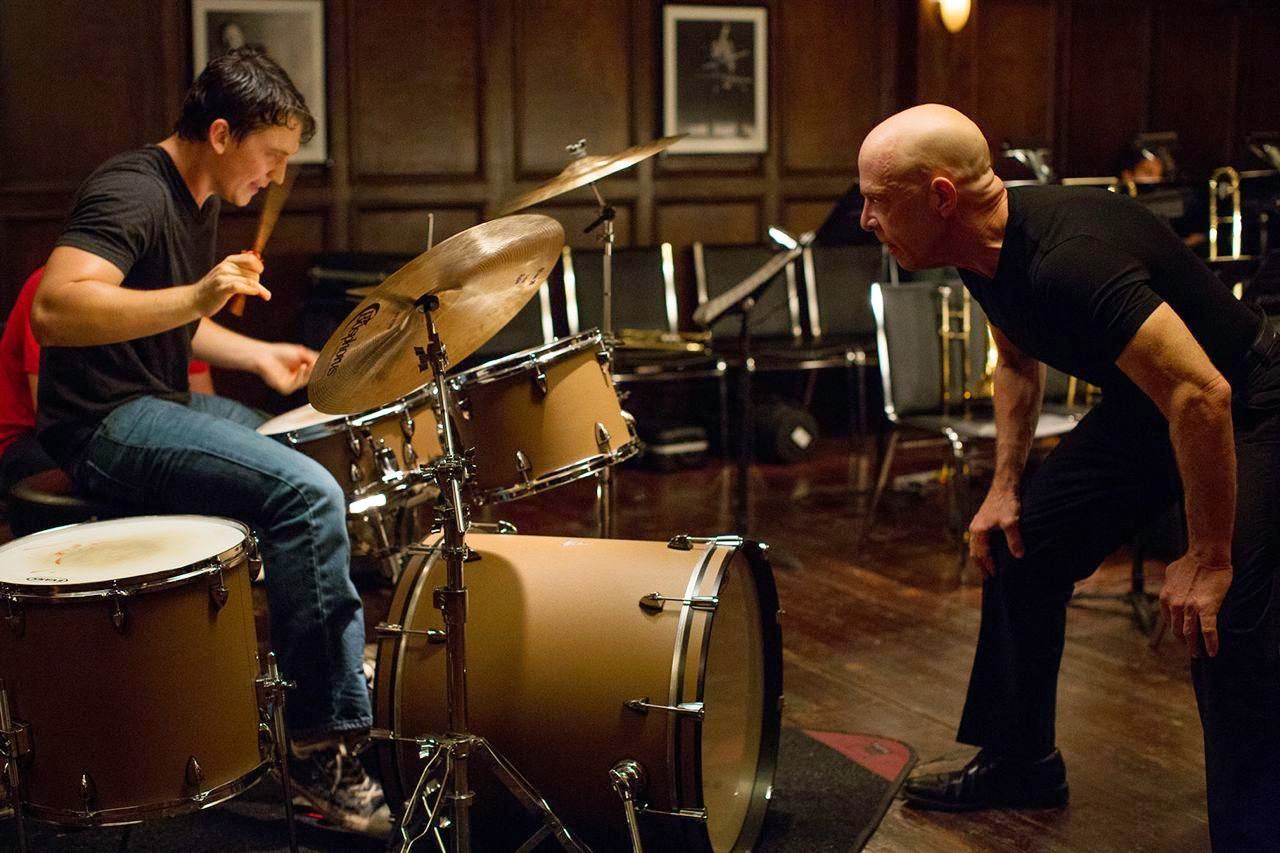
3) WHIPLASH – Words just can’t convey the spine-tingling electricity generated by the final moments of writer/director Damien Chazelle’s enthralling indie about one obsessively single-minded drummer’s battle to win over his draconian jazz teacher. Fuelled by the combustible, profane chemistry of dueling stars Miles Teller and a sadistically terrifying J.K. Simmons (give this man the supporting actor Oscar, already!), Whiplash is a superior take on the Rocky-esque underdog story that more than lives up to its title. Although the film poses tough questions about how best to foster artistic virtuosity, Chazelle never leaves an ounce of doubt that he’s in complete and total control of his own pulse-quickening gifts.
4) LIFE ITSELF – Given Roger Ebert’s immeasurable Pulitzer Prize-winning influence in the arena of film criticism, it would have been easy to crank out a superficial, fawning tribute to the man’s brilliance and impact. Thankfully, Steve James, the celebrated director of Hoop Dreams, resisted that urge. Loosely based on the legendary newspaperman’s memoir of the same name, the picture instead offers a warts and all glimpse into the mortal behind the icon, honing in on his industry-changing work, personal triumphs and failings, ravaging illness and the extraordinary marriage that gave him peace and strength. This is a genuinely moving, funny, surprising – the segments recalling Gene Siskel’s swinging single days are jaw-dropping – and perceptive documentary that acts as a majestic testament to both its subject’s legacy and his passionate zest for, well, life itself.
5) NIGHTCRAWLER – Plainly put, no performance last year was as riveting as Jake Gyllenhaal’s unnerving transformation into reptilian sociopath Lou Bloom, the soulless corporate slogan-spouting opportunist driving writer/director Dan Gilroy’s sinister L.A. neo noir. Emaciated, bug-eyed and operating like a detached alien wrapped in human skin, the actor hypnotically disappears into his juicy role as an observant, immoral loner who sets out to conquer the TV news world by capturing the most grotesque footage possible. A near perfect blending of live wire performance and moody, character-focused storytelling (recapturing the spirit of edgy 1970s classics like Network and Taxi Driver), Nightcrawler keeps you precariously on the edge of your seat, trying - yet never quite succeeding - to anticipate which way its unrepentantly slimy protagonist will veer next.
6) HOW TO TRAIN YOUR DRAGON 2 – A sensational family entertainment, this enchanting return trip to the tiny Viking island of Berk matches the first chapter in terms of pure eye-popping exhilaration and wonder, while adding an unexpected layer of darkness. Adapting Cressida Cowell’s best-selling children’s novels, returning writer/director Dean DeBlois has lovingly fashioned another delightful adventure yarn, full of heart and breathtaking sights, which also serves as a refreshingly mature warning about the importance of humane animal treatment and responsible pet ownership. How to Train Your Dragon 2 is also a pitch perfect case study in sequel world expansion done with imagination and wit, opening up intriguing new terrain for Hiccup and Toothless – one of modern cinema’s most winning creature creations – to spread their wings and fly.
7) JODOROWSKY’S DUNE – There’s was never any doubt that Alejandro Jodorowsky, the surrealist Chilean director of such head-tripping hallucinogenic odysseys as El Topo and Holy Mountain, is one odd duck. However, as evidenced by Frank Pavich’s hilarious and engrossing documentary, he’s also a wonderfully engaging storyteller and thoroughly misunderstood visionary. A retrospective look at Jodorowsky’s failed attempt to adapt Frank Herbert’s science-fiction classic “Dune” into a bizarro artistic masterwork in the mid-70s, the film weaves priceless behind-the-scenes anecdotes, insightful critical commentary and page after page of beautiful concept art into an inspirational tale of thwarted genius nevertheless changing the cinematic landscape forever.
10) NYMPHOMANIAC – Controversial cinematic provocateur Lars Von Trier’s two-part magnum opus of button-pushing excess should probably have been unwatchable. A four hour meditation on female sexuality, maturation and, uh, fly fishing, Nymphomaniac is an utterly relentless, uncomfortable and overwhelming experience that follows its erotically fixated protagonist (fearlessly played, at differing ages, by Charlotte Gainsbourg and Stacy Martin) from her earliest stages of naïve experimentation to the darkest depths of self-destructive compulsion. And yet, despite the heaviness of its downward spiral structure, Von Trier infuses the film with so much energy, offbeat humor and engaging enigmatic oddness that it leaves you mentally unpacking its many mysteries long after you’ve dazedly reached its disquieting conclusion.
Honorable Mentions: BLUE RUIN, GUARDIANS OF THE GALAXY, THE GUEST, THE THEORY OF EVERYTHING, UNDER THE SKIN
Wednesday, September 10, 2014
Film Review - THE TRIP TO ITALY
Though few this side of the pond joined Steve Coogan and Rob Brydon for their first vacation, 2011’s very funny and perceptive The Trip, there’s a damn good chance many stumbled across the Michael Caine impression segment it spawned on YouTube. This hilarious, brief sequence - a delirious spoofing of classic lines from The Italian Job, Get Carter and The Dark Knight – proved something of a mini viral sensation and perfectly encapsulated the film’s drolly improvisational, breezy tone and the well-oiled chemistry between its two leads. What wasn’t sold, however, was the project’s shaggy, skillfully-achieved mission statement; to capture the quietly terrifying existential panic of middle age, and the confused human flaws it magnifies.
That theme continues in the duo’s winning second venture, The Trip to Italy, which sees them roaming the gorgeous sun-soaked coast, from Liguria to Capri, over the course of another six days of sight-seeing, obsessing over pop-culture, literature and their personal lives and savoring ornately prepared meals. However, despite the intoxicating idyllic atmosphere and local charm, reality frequently threatens to creep in. While the dry, cynical Coogan struggles with doubts surrounding his angsty teenage son, career dissatisfaction and waning attractiveness to the opposite sex, Brydon – an “affable” and eccentric motor-mouthed family man – awkwardly flirts with the lure of forbidden holiday promiscuity. Amusing until the last, the men cope with these crises through rapid fire good-natured barbs, dizzying displays of spontaneous comedic one-upmanship, and *ahem* reveling in the self-empowerment anthems of Alanis Morissette’s “Jagged Little Pill,” learning just a tiny bit more about themselves along the way.
Playing loosely fictionalized versions of themselves, the two stars again prove ideal tour guides, endlessly engaging, authentically raw, and unafraid to expose the weaknesses, fears and foibles concealed beneath their established personas. It’s these vanity-free revelations that make The Trip to Italy both a great sequel and a curiously poignant and relatable jaunt (which is saying something, given Coogan and Brydon’s professional stature and bank accounts). But, of course, this is also a movie almost totally dominated by humor, and it boasts an impressive abundance of comic highlights, including a restaurant table riffing session poking fun at the incomprehensible dialects of the cast of The Dark Knight Rises, and a hammy impromptu mobster film audition tape featuring a beautiful hotel concierge. And, as expected, the verbally dexterous stars throw down a battery of dead-on show biz icon imitations, cheekily channeling Clint Eastwood, Robert De Niro, Al Pacino, Marlon Brando, Hugh Grant, Woody Allen, Humphrey Bogart and almost every single James Bond at a whim.
Unobtrusive returning director Michael Winterbottom (The Killer Inside Me, A Mighty Heart) creates a bright, relaxed atmosphere for Coogan and Brydon – wisely stepping back whenever the two get going – and, with cinematographer James Clarke, masterfully delivers the all-important travelogue splendor and saliva-quickening gourmet food porn. Editing down his own six-part BBC television series to motion picture length – just as he did with The Trip – the helmer once more accomplishes an unenviable task without forsaking coherence, character or narrative flow. Considering these dubious origins, it’s a minor miracle that not only does The Trip to Italy feel complete and satisfying on its own, you’d be forgiven for never suspecting it wasn’t conceived this way to begin with.

True to its predecessor, The Trip to Italy is another pleasant, charming and witty treat; a diverting light comedy for grown-ups made with intelligence and just the right hint of cheerful madness. It would be wonderful if this became a regular event, and we could reunite with Coogan, Brydon and Winterbottom every few years simply to visit new locales, laugh, reflect and track the characters’ messy evolution. Finding good travel companions isn’t easy, after all, and when they’re this much fun it’s hard not to want to keep planning future outings.
3.5 out of 5
That theme continues in the duo’s winning second venture, The Trip to Italy, which sees them roaming the gorgeous sun-soaked coast, from Liguria to Capri, over the course of another six days of sight-seeing, obsessing over pop-culture, literature and their personal lives and savoring ornately prepared meals. However, despite the intoxicating idyllic atmosphere and local charm, reality frequently threatens to creep in. While the dry, cynical Coogan struggles with doubts surrounding his angsty teenage son, career dissatisfaction and waning attractiveness to the opposite sex, Brydon – an “affable” and eccentric motor-mouthed family man – awkwardly flirts with the lure of forbidden holiday promiscuity. Amusing until the last, the men cope with these crises through rapid fire good-natured barbs, dizzying displays of spontaneous comedic one-upmanship, and *ahem* reveling in the self-empowerment anthems of Alanis Morissette’s “Jagged Little Pill,” learning just a tiny bit more about themselves along the way.
Playing loosely fictionalized versions of themselves, the two stars again prove ideal tour guides, endlessly engaging, authentically raw, and unafraid to expose the weaknesses, fears and foibles concealed beneath their established personas. It’s these vanity-free revelations that make The Trip to Italy both a great sequel and a curiously poignant and relatable jaunt (which is saying something, given Coogan and Brydon’s professional stature and bank accounts). But, of course, this is also a movie almost totally dominated by humor, and it boasts an impressive abundance of comic highlights, including a restaurant table riffing session poking fun at the incomprehensible dialects of the cast of The Dark Knight Rises, and a hammy impromptu mobster film audition tape featuring a beautiful hotel concierge. And, as expected, the verbally dexterous stars throw down a battery of dead-on show biz icon imitations, cheekily channeling Clint Eastwood, Robert De Niro, Al Pacino, Marlon Brando, Hugh Grant, Woody Allen, Humphrey Bogart and almost every single James Bond at a whim.
Unobtrusive returning director Michael Winterbottom (The Killer Inside Me, A Mighty Heart) creates a bright, relaxed atmosphere for Coogan and Brydon – wisely stepping back whenever the two get going – and, with cinematographer James Clarke, masterfully delivers the all-important travelogue splendor and saliva-quickening gourmet food porn. Editing down his own six-part BBC television series to motion picture length – just as he did with The Trip – the helmer once more accomplishes an unenviable task without forsaking coherence, character or narrative flow. Considering these dubious origins, it’s a minor miracle that not only does The Trip to Italy feel complete and satisfying on its own, you’d be forgiven for never suspecting it wasn’t conceived this way to begin with.

True to its predecessor, The Trip to Italy is another pleasant, charming and witty treat; a diverting light comedy for grown-ups made with intelligence and just the right hint of cheerful madness. It would be wonderful if this became a regular event, and we could reunite with Coogan, Brydon and Winterbottom every few years simply to visit new locales, laugh, reflect and track the characters’ messy evolution. Finding good travel companions isn’t easy, after all, and when they’re this much fun it’s hard not to want to keep planning future outings.
3.5 out of 5
Wednesday, September 03, 2014
Film Review - BLUE RUIN
Upon first glance, Dwight would hardly seem a particular capable agent of revenge. Paunchy, pale and scraggly, wide melancholy eyes staring off towards some unknown horizon, he’s a shambling wreck of a man devoid of home or comfort, scrounging for food in carnival dumpsters and sleeping in his beat up blue Pontiac. He looks more like an aimless, broken drifter destined to die alone under his favorite pier, forgotten, than to cut a bloody swath across Virginia on a single-minded quest for brutal retribution. But, then, appearances can be deceiving.
Dwight, played with haunted fragility by Macon Blair, is our guide through Blue Ruin, Jeremy Saulnier’s gripping and refreshing neo-noir character drama that presents one of the most unlikely eye-for-an-eye thriller yarns in quite some time. Originally pitched as “No Country for Old Men with an idiot at the helm,” this is actually a far more complicated and emotionally moving vision; an absorbing portrait of what happens when a very normal, unexceptional human being (no Anton Chigurh-like supernatural efficiency here) is driven by trauma into an inescapable violent existence. The results are messy, tragic, laced with pitch black humor and sadly poetic.
When we first encounter our lead, he’s stuck in a morose, solitary holding pattern, waiting for… something. That something, we soon learn, is the impending release of the criminal who murdered his parents. Following the ex-con and his family to a roadside dive, Dwight sneaks into the joint’s bathroom and, trembling with anxiety, knife firmly in hand, prepares to strike.
And thus kicks off Saulnier’s sad, stark, gore-spattered odyssey; a stunning work of tone and atmosphere, that stares directly into the heart of vengeance and discovers only emptiness, loneliness and despair. Visibly inspired by the Coen brothers, the writer-director, who previously helmed the 2007 festival hit Murder Party, has crafted a deceptively simple, stripped down meditation of a film that encourages us to dive headlong into the scarred psyche of its protagonist. This is an observant, personal story of unfortunate self-destruction, which nevertheless also manages the difficult task of driving the viewer uncomfortably close to the edge of their seat during several brilliantly-constructed sequences of unbearable suspense.

Because Dwight is a beginner at this sort of thing, Saulnier skillfully milks endless tension from each and every deadly encounter he wanders into. After all, lacking any professional training or hands on experience, he’s prone to clumsy mistakes and misjudgments, such a sensational moment where a late night stake-out in an enemy’s house is thrown totally out of whack by a light getting turned on. Or, even more impressive, the slowly unfolding disaster that occurs during an interrogation at gunpoint wherein a dangerous captive (Kevin Kolack), newly freed from our hero’s trunk, quickly proves just how much cannier he is than his nervous rifle-wielding abductor. Tossing aside his handbook of standard tropes, the director shows a bold willingness to mine invention from every one of his standard genre set-ups, packing this lean, 90-minute exercise with countless small surprises that are exponentially magnified by the intimacy of the scope.
It’s also crucial to emphasize just how beautiful Blue Ruin is to look at. The helmer, who has spent over a decade working as a cinematographer, shows a sharp eye for gorgeously-framed, evocative shots. Working with resources far more modest than several of this year’s most visually exciting low-budget films – Under the Skin, Only Lovers Left Alive and Enemy, to name a few – Saulnier works wonders with precious little, imbuing his Virginia locations with shabby mythic grandeur, and fills the screen with cool and arresting blue imagery. You could freeze frame at almost any time during this picture and be blown away by the compositions.
As wonderfully constructed as Blue Ruin is, however, all would be for naught without the right talent in the central role. This is largely a one-man show, and Blair is a true discovery; a shlumpy, self-conscious everyman (think Michael Shannon’s sad-sack little brother) whose innocent puppy dog eyes mask a soul darkened by unspeakable horror. Speaking in short bursts – if at all – Blair holds our attention throughout, drawing our unreserved sympathies and inspiring silent screams of warning when Dwight stumbles into a bad situation. He’s a heartbreaking, pitiful creature hiding behind a wall of mournful isolation so impenetrable even his sister Sam (Amy Hargreaves) and old friend Teddy (Devin Ratray) can no longer connect with him on a human level. And, thanks to the actor’s immense efforts, he’s also a true, unforgettable original.
Given the profound strength of this material, it’s kind of shocking we haven’t seen a similar crime thriller tale told in this fashion before. Perhaps, though, that’s the genius of the picture; its clever premise is communicated so plainly and expertly it all just feels natural, obscuring the brilliance of the masterminds pulling the strings. Poignant and intense, Blue Ruin heralds the arrival of two bold new creative voices and, unlike Dwight, hits the mark with every ringing pull of the trigger.
4 out of 5
*Blue Ruin is available on VOD and DVD/Blu-ray now!
Dwight, played with haunted fragility by Macon Blair, is our guide through Blue Ruin, Jeremy Saulnier’s gripping and refreshing neo-noir character drama that presents one of the most unlikely eye-for-an-eye thriller yarns in quite some time. Originally pitched as “No Country for Old Men with an idiot at the helm,” this is actually a far more complicated and emotionally moving vision; an absorbing portrait of what happens when a very normal, unexceptional human being (no Anton Chigurh-like supernatural efficiency here) is driven by trauma into an inescapable violent existence. The results are messy, tragic, laced with pitch black humor and sadly poetic.
When we first encounter our lead, he’s stuck in a morose, solitary holding pattern, waiting for… something. That something, we soon learn, is the impending release of the criminal who murdered his parents. Following the ex-con and his family to a roadside dive, Dwight sneaks into the joint’s bathroom and, trembling with anxiety, knife firmly in hand, prepares to strike.And thus kicks off Saulnier’s sad, stark, gore-spattered odyssey; a stunning work of tone and atmosphere, that stares directly into the heart of vengeance and discovers only emptiness, loneliness and despair. Visibly inspired by the Coen brothers, the writer-director, who previously helmed the 2007 festival hit Murder Party, has crafted a deceptively simple, stripped down meditation of a film that encourages us to dive headlong into the scarred psyche of its protagonist. This is an observant, personal story of unfortunate self-destruction, which nevertheless also manages the difficult task of driving the viewer uncomfortably close to the edge of their seat during several brilliantly-constructed sequences of unbearable suspense.

Because Dwight is a beginner at this sort of thing, Saulnier skillfully milks endless tension from each and every deadly encounter he wanders into. After all, lacking any professional training or hands on experience, he’s prone to clumsy mistakes and misjudgments, such a sensational moment where a late night stake-out in an enemy’s house is thrown totally out of whack by a light getting turned on. Or, even more impressive, the slowly unfolding disaster that occurs during an interrogation at gunpoint wherein a dangerous captive (Kevin Kolack), newly freed from our hero’s trunk, quickly proves just how much cannier he is than his nervous rifle-wielding abductor. Tossing aside his handbook of standard tropes, the director shows a bold willingness to mine invention from every one of his standard genre set-ups, packing this lean, 90-minute exercise with countless small surprises that are exponentially magnified by the intimacy of the scope.
It’s also crucial to emphasize just how beautiful Blue Ruin is to look at. The helmer, who has spent over a decade working as a cinematographer, shows a sharp eye for gorgeously-framed, evocative shots. Working with resources far more modest than several of this year’s most visually exciting low-budget films – Under the Skin, Only Lovers Left Alive and Enemy, to name a few – Saulnier works wonders with precious little, imbuing his Virginia locations with shabby mythic grandeur, and fills the screen with cool and arresting blue imagery. You could freeze frame at almost any time during this picture and be blown away by the compositions.
As wonderfully constructed as Blue Ruin is, however, all would be for naught without the right talent in the central role. This is largely a one-man show, and Blair is a true discovery; a shlumpy, self-conscious everyman (think Michael Shannon’s sad-sack little brother) whose innocent puppy dog eyes mask a soul darkened by unspeakable horror. Speaking in short bursts – if at all – Blair holds our attention throughout, drawing our unreserved sympathies and inspiring silent screams of warning when Dwight stumbles into a bad situation. He’s a heartbreaking, pitiful creature hiding behind a wall of mournful isolation so impenetrable even his sister Sam (Amy Hargreaves) and old friend Teddy (Devin Ratray) can no longer connect with him on a human level. And, thanks to the actor’s immense efforts, he’s also a true, unforgettable original.Given the profound strength of this material, it’s kind of shocking we haven’t seen a similar crime thriller tale told in this fashion before. Perhaps, though, that’s the genius of the picture; its clever premise is communicated so plainly and expertly it all just feels natural, obscuring the brilliance of the masterminds pulling the strings. Poignant and intense, Blue Ruin heralds the arrival of two bold new creative voices and, unlike Dwight, hits the mark with every ringing pull of the trigger.
4 out of 5
*Blue Ruin is available on VOD and DVD/Blu-ray now!
Tuesday, September 02, 2014
Film Review - SIN CITY: A DAME TO KILL FOR
Sin City: The Dame to Kill For doubtlessly seemed like a good idea on paper. Given the pedigree of its cast, source material and the favorable reputation of its predecessor, which was such an eye-popping blast when it bowed in 2005, how could it not? What a difference nine years makes. Robert Rodriguez and Frank Miller’s return to the grimy, sweaty, gore-streaked streets now feels flat, predictable and kinda sad. The results never approach Immortals or The Spirit levels of unwatchable wretchedness, to be fair, but the picture lacks sizzle and shock, and never strives to raise the bar for this brand of stylized green screen filmmaking. It’s trying to replicate the past, rather than aspiring to surpass it.
Continuing the established structure, A Dame to Kill For likewise consists of three major stories that dance around each other, connecting only superficially (often through the presence of Mickey Rourke’s invaluable brute Marv), yet all representative of the hopelessly blackened soul of the titular city. We see the return of Dwight (Josh Brolin – replacing Clive Owen), a scummy private eye with a penchant for getting his clock cleaned, this time embroiled in a high stakes game of murder, lust and betrayal with Eva Green’s ice-cold, frequently au naturel Ava. There’s also Joseph Gordon-Levitt’s Johnny, a deceptively clean-cut gambler planning to topple the sinister Senator Roarke (Powers Boothe) in a dangerous poker match, to hell with the consequences. Rounding out the triptych is Nancy the stripper (Jessica Alba – a lightweight weak link, once again), now on a self-destructive path following the killing of Bruce Willis’s savior cop Hartigan, with her sights firmly set on the powerful father of her infamous deceased nemesis, the Yellow Bastard.
One of Sin City’s greatest joys was watching each of its unique and compelling tales flirt with one another while nevertheless working individually as complete visions of urban decay-tinged chaos. By contrast, A Dame to Kill For really drops the ball on the storytelling front, depending too much on knowledge of the previous entry and playing confusingly fast and loose with the timeline. Like 2014’s other questionable too-late green screen sequel, 300: Rise of an Empire (a much more successful endeavor on an entertainment level, despite being fairly disposable), this film acts as a prequel, sequel and side-quel; a choice that totally prevents the movie from standing alone and creates a barrier of disorientation that prevents the viewer from being able to be absorbed into the hard-boiled narrative. This screenwriting messiness is detrimental to the strength of the parts and plays havoc with the flow of the whole, making the 102-minute run-time (20 minutes less that the original) feel waaaay longer than it actually is. A palpable sense of dread kicks in when Alba’s character takes center stage and you realize there’s still more weary ground to cover.
Perhaps the biggest problem with Sin City is the guy who created it in the first place, Frank Miller. A man of nearly unparalleled genius in his comic-book heyday (there’s a damn good reason “The Dark Knight Returns” and his run on “Daredevil” are so staggeringly influential), he’s become a genuinely problematic artistic voice in our current era due to his near self-parodic over-tendency to rely on sadism, tough guy posturing and uncomfortably masturbatory depictions of women. The sadism and posturing is still ever-present, albeit now pretty much hollow and devoid of impact. The misogyny, however, has grown infinitely more troubling, creepy and difficult to see beyond. Sure, back in 2005, we noticed it. Yet it managed to blend into this world’s larger web of gaudy extravagance and ruthless nihilism, creating a grander portrait of winking exploitative seediness run amok. It was undeniably unsavory, but not overly offensive. Such is not the case with A Dame to Kill For, which descends so deeply into the muck that the results operate solely as a grotesque checklist of Miller’s erotic fixations. Women are either “whores” or victims, all dressed like porn stars, and subjected to being endlessly fetishized by the dehumanizing and detached male-gaze of Rodriguez’s camera. In a film climate where there’s a genuine frustrated demand for strong female characters, this sort of leering, pervy B-movie nonsense no longer plays like a cheeky homage to simpler cinematic times; it feels tired, antiquated and pretty gross.
Additionally, it’s more than a little apparent here that Miller, who has sole screenwriting credit, may love the sensibilities of film noir, though doesn’t quite grasp the intricacies offered by it. When the form emerged in American cinema in the thirties, it was usually typified by its dense shades of moral ambiguity, and troubled characters who all too often occupied grey territory, not quite villains and not quite heroes. Sin City doesn't explore these complexities, and makes it all too clear which side of the line its characters are standing. Heck, even ol’ homicidal Marv has a very specific, unbreakable code he lives by, usually serving as defender of the innocent. By ignoring this crucial element of noir, the writer delivers a shallow, over-simplified imitation, rather than a satisfying slice of the real deal.
Despite the fallacies of the material, credit where credit is due, many of the actors show up to play and almost succeed in carrying the picture back from the abyss. Eva Green, fast-turning into a female version of the Rock, redeeming unnecessary franchise sequels through sheer charisma, brings plenty of seething fierceness and manipulative black widow charm to her scheming title character (someone please give this fantastic actress a movie project worthy of her talents). She finds a strong sparring partner in Brolin who, despite lacking Owen’s suaveness, was born to spit out surly noir dialogue. Also stellar, unsurprisingly, is Rourke, who again infuses his iconic role with sad nobility and tragic horror. Gordon-Levitt brings a nice touch of cool period-era rakishness, while Dennis Haysbert, taking over for Michael Clarke Duncan as towering thug Manute, and Boothe make amusingly menacing villains.
Honestly, the failure of Rodriguez and Miller to fashion anything exciting or new from all of their resources really calls into question whether there’s even a place for these types of movies anymore, where actors are placed into synthetic screensaver environments, edited into scenes with one another and surrounded by cartoonish happenings. It’s impossible to be wowed by the technique and with nothing else tangible to hold onto we’re left bored and uninvolved. Like watching a magic trick that has had its secret revealed, Sin City: A Dame to Kill For is all routine, zero astonishment.
1.5 out of 5
Continuing the established structure, A Dame to Kill For likewise consists of three major stories that dance around each other, connecting only superficially (often through the presence of Mickey Rourke’s invaluable brute Marv), yet all representative of the hopelessly blackened soul of the titular city. We see the return of Dwight (Josh Brolin – replacing Clive Owen), a scummy private eye with a penchant for getting his clock cleaned, this time embroiled in a high stakes game of murder, lust and betrayal with Eva Green’s ice-cold, frequently au naturel Ava. There’s also Joseph Gordon-Levitt’s Johnny, a deceptively clean-cut gambler planning to topple the sinister Senator Roarke (Powers Boothe) in a dangerous poker match, to hell with the consequences. Rounding out the triptych is Nancy the stripper (Jessica Alba – a lightweight weak link, once again), now on a self-destructive path following the killing of Bruce Willis’s savior cop Hartigan, with her sights firmly set on the powerful father of her infamous deceased nemesis, the Yellow Bastard.
One of Sin City’s greatest joys was watching each of its unique and compelling tales flirt with one another while nevertheless working individually as complete visions of urban decay-tinged chaos. By contrast, A Dame to Kill For really drops the ball on the storytelling front, depending too much on knowledge of the previous entry and playing confusingly fast and loose with the timeline. Like 2014’s other questionable too-late green screen sequel, 300: Rise of an Empire (a much more successful endeavor on an entertainment level, despite being fairly disposable), this film acts as a prequel, sequel and side-quel; a choice that totally prevents the movie from standing alone and creates a barrier of disorientation that prevents the viewer from being able to be absorbed into the hard-boiled narrative. This screenwriting messiness is detrimental to the strength of the parts and plays havoc with the flow of the whole, making the 102-minute run-time (20 minutes less that the original) feel waaaay longer than it actually is. A palpable sense of dread kicks in when Alba’s character takes center stage and you realize there’s still more weary ground to cover.
Perhaps the biggest problem with Sin City is the guy who created it in the first place, Frank Miller. A man of nearly unparalleled genius in his comic-book heyday (there’s a damn good reason “The Dark Knight Returns” and his run on “Daredevil” are so staggeringly influential), he’s become a genuinely problematic artistic voice in our current era due to his near self-parodic over-tendency to rely on sadism, tough guy posturing and uncomfortably masturbatory depictions of women. The sadism and posturing is still ever-present, albeit now pretty much hollow and devoid of impact. The misogyny, however, has grown infinitely more troubling, creepy and difficult to see beyond. Sure, back in 2005, we noticed it. Yet it managed to blend into this world’s larger web of gaudy extravagance and ruthless nihilism, creating a grander portrait of winking exploitative seediness run amok. It was undeniably unsavory, but not overly offensive. Such is not the case with A Dame to Kill For, which descends so deeply into the muck that the results operate solely as a grotesque checklist of Miller’s erotic fixations. Women are either “whores” or victims, all dressed like porn stars, and subjected to being endlessly fetishized by the dehumanizing and detached male-gaze of Rodriguez’s camera. In a film climate where there’s a genuine frustrated demand for strong female characters, this sort of leering, pervy B-movie nonsense no longer plays like a cheeky homage to simpler cinematic times; it feels tired, antiquated and pretty gross.
Additionally, it’s more than a little apparent here that Miller, who has sole screenwriting credit, may love the sensibilities of film noir, though doesn’t quite grasp the intricacies offered by it. When the form emerged in American cinema in the thirties, it was usually typified by its dense shades of moral ambiguity, and troubled characters who all too often occupied grey territory, not quite villains and not quite heroes. Sin City doesn't explore these complexities, and makes it all too clear which side of the line its characters are standing. Heck, even ol’ homicidal Marv has a very specific, unbreakable code he lives by, usually serving as defender of the innocent. By ignoring this crucial element of noir, the writer delivers a shallow, over-simplified imitation, rather than a satisfying slice of the real deal.
Despite the fallacies of the material, credit where credit is due, many of the actors show up to play and almost succeed in carrying the picture back from the abyss. Eva Green, fast-turning into a female version of the Rock, redeeming unnecessary franchise sequels through sheer charisma, brings plenty of seething fierceness and manipulative black widow charm to her scheming title character (someone please give this fantastic actress a movie project worthy of her talents). She finds a strong sparring partner in Brolin who, despite lacking Owen’s suaveness, was born to spit out surly noir dialogue. Also stellar, unsurprisingly, is Rourke, who again infuses his iconic role with sad nobility and tragic horror. Gordon-Levitt brings a nice touch of cool period-era rakishness, while Dennis Haysbert, taking over for Michael Clarke Duncan as towering thug Manute, and Boothe make amusingly menacing villains.
Honestly, the failure of Rodriguez and Miller to fashion anything exciting or new from all of their resources really calls into question whether there’s even a place for these types of movies anymore, where actors are placed into synthetic screensaver environments, edited into scenes with one another and surrounded by cartoonish happenings. It’s impossible to be wowed by the technique and with nothing else tangible to hold onto we’re left bored and uninvolved. Like watching a magic trick that has had its secret revealed, Sin City: A Dame to Kill For is all routine, zero astonishment.
1.5 out of 5
Sunday, August 10, 2014
SUBSPACE TRANSMISSIONS Beams Into Vegas Con 2014!
Following an exhausting, exhilarating and thoroughly enjoyable away mission at Creation's 2014 Las Vegas Star Trek Convention hosts Cam Smith and Tyler Orton, along with special guests Scott Hardy and James Chesser, regroup in their hotel room and celebrate the most memorable moments of their four-day adventure. Over the course of this giddy hour and change of observations, criticisms and geek bliss, tales of lost con love and unexpected celebrity encounters are recounted, and a tribute is held to the event's most unexpectedly awesome guest. So enjoy and start your countdown clocks to summer 2015!Click here to boldly go to the Subspace Transmissions blog.
Or, head over to the iTunes store and subscribe to the show!
Send any questions or comments to subspacetransmissionspod@gmail.com
SUBSPACE TRANSMISSIONS Gazes Into The Future Of TV!
In this energetically nerdy hour of speculative discussion hosts Cam Smith, Benjamin Yong and Tyler Orton gaze into their crystal ball and attempt to predict what the future holds for the franchise we all hold so dear. Will Trek convert to a 13-episode per season format? What's the likelihood of the show picking up where the Berman era ended? These tantalizing questions, among many others, are obsessively picked apart in order to determine the best possible course for artistic and commercial success. In addition, the crew offer up their own ideas as to what they'd like to see on the next itineration, as well as explain why the prospect of a Captain Worf spin-off isn't necessarily a good thing... So join us as we take a brave step into the strange, alien world of the Hollywood TV industry and strive to make sense of it all for the betterment of Trek-kind.
Click here to boldly go to the Subspace Transmissions blog.
Or, head over to the iTunes store and subscribe to the show!
Send any questions or comments to subspacetransmissionspod@gmail.com
Click here to boldly go to the Subspace Transmissions blog.
Or, head over to the iTunes store and subscribe to the show!
Send any questions or comments to subspacetransmissionspod@gmail.com
Sunday, July 27, 2014
SUBSPACE TRANSMISSIONS Goes To The Movies: Part II
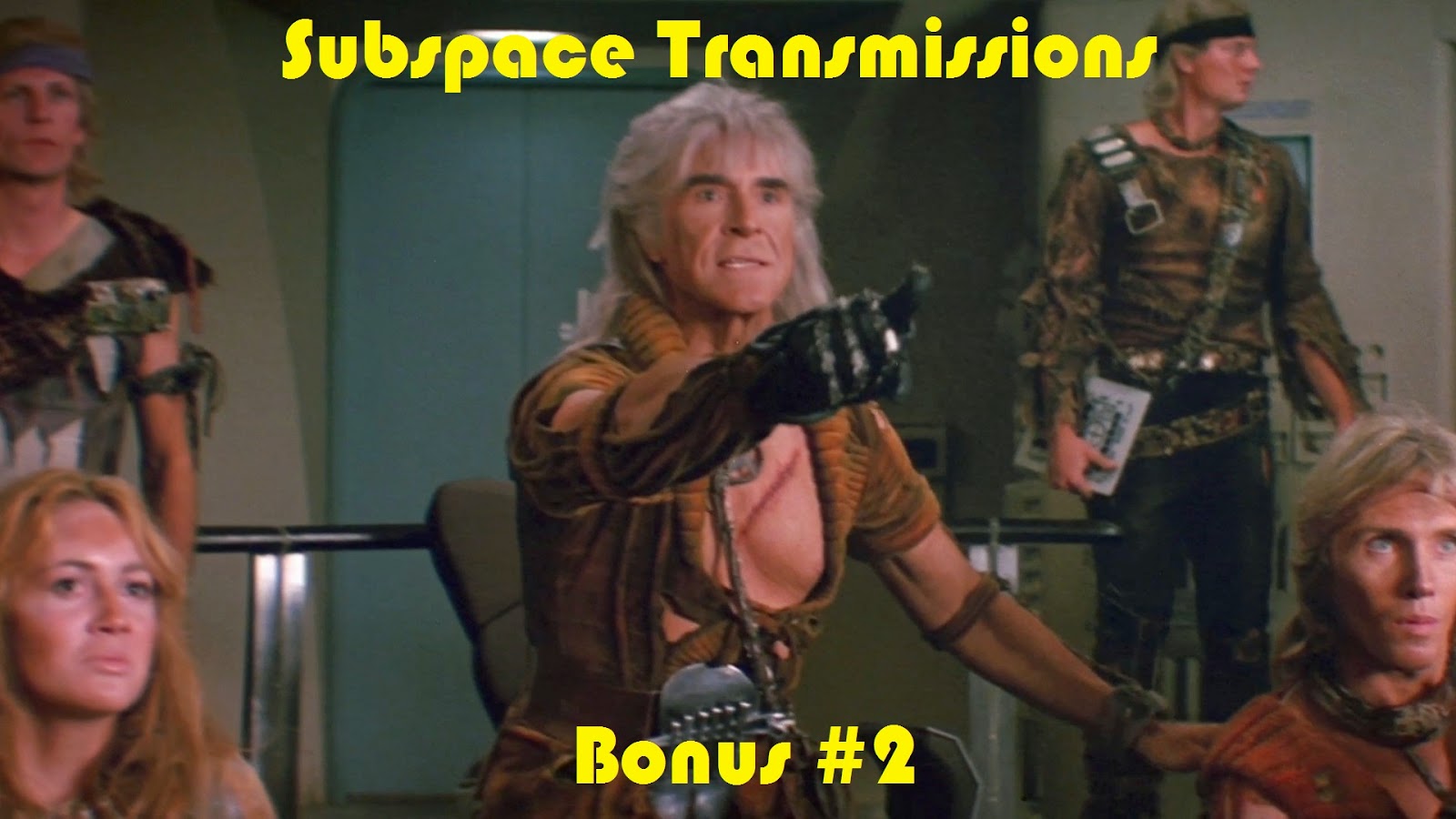
Returning with another Film Flashback bonus episode hosts Cam Smith and Tyler Orton finally take on a giant of the franchise; 1982's awesomely entertaining STAR TREK II: THE WRATH OF KHAN. Does the picture still hold up all after all these years? Does it have any nagging flaws? Over the course of a lengthy informal chat these topics are tackled, as well as the themes, action sequences and character beats that make the film so insanely popular. So buckle yourself in for a fun, free-wheeling supplemental show that delves boldly into this series-reenergizing tale of vengeance in the heavens.
Click here to boldly go to the Subspace Transmissions blog.
Or, head over to the iTunes store and subscribe to the show!
Send any questions or comments to subspacetransmissionspod@gmail.com
Click here to boldly go to the Subspace Transmissions blog.
Or, head over to the iTunes store and subscribe to the show!
Send any questions or comments to subspacetransmissionspod@gmail.com
Wednesday, July 23, 2014
Pizza Power & Nunchaku Nostalgia: Revisiting The TMNT Part 2 - TEENAGE MUTANT NINJA TURTLES II: THE SECRET OF THE OOZE (1991)
Following the spectacular success of the inaugural Teenage Mutant Ninja Turtles movie the only thing that could have prevented a follow-up was the apocalypse. There was much more money to be mined from Turtlemania, by golly, and New Line Cinema and Golden Harvest were understandably eager to milk Eastman and Laird’s fantastical creations for all they were worth. Fast-tracked to open slightly less than a year after the first, the $25-million-budgeted second picture saw a major overhaul of the cast and behind-the-scenes crew – notably actors Elias Koteas, Judith Hoag and Corey Feldman, director Steve Barron, co-writer Bobby Herbeck and editor Sally Menke – and, in response to backlash over the violence and edginess of the original, was envisioned as a lighter, goofier adventure more reminiscent of the animated syndicated series. The censors and parents groups may not have won the battle of 1990, but they were certainly going to win the war. The resulting effort, Teenage Mutant Ninja Turtles II: The Secret of the Ooze, was a respectable hit when it opened March 22, 1991, eventually bringing in $78-mill at the domestic box-office. While a noticeable decrease in ticket sales from the characters’ cinematic debut, it’s crucial to remember that these were still the days when the law of diminishing returns was a common reality for franchises, as audiences, and frequently creative ambition, dropped off with each successive instalment (that said, James Cameron’s Terminator 2: Judgment Day would arrive just four months later and lay waste to summer movie competition; an omen of the blockbuster business model of future days to come). So, even if the telltale warning signs that Turtle Fever was beginning to break were obvious, the sheer volume of cash generated by tie-in merchandise and ancillary profits no doubt had the studio’s money men as giddy as the series’ enthusiastic young fans.
Picking up mere hours after the radical reptiles victoriously celebrated to the pulsing beat of Spunkadelic’s insanely infectious “9.95,” Secret of the Ooze sees Leonardo (Mark Caso, voice by Brian Tochi), Michelangelo (Michelan Sisti, voice by Robbie Rist), Donatello (Leif Tilden, voice by Adam Carl), Raphael (Kenn Scott, voice by Laurie Faso) and Splinter (Kevin Clash) without a home, seeking refuge in the comfortable domicile of their trusted TV news reporter friend, April O’Neil (Paige Turco). Tranquility doesn’t last long, however, as the Shredder (Francois Chau, voice by David McCharen) climbs out of the city garbage dump and sets about seeking vengeance. Reassembling the deadly Foot Clan, the vicious villain and his grunting sidekick Tatsu (Toshishiro Obata, voice by Michael McConnohie) fix their sights on TGRI, a local scientific corporation in the midst of a massive environmental clean-up effort, stealing a glowing canister of the same neon green goo that created our heroes 15 year prior. Soon, two more mutants - snapping turtle Tokka (Kurt Bryant, voice by Frank Welker) and wolf Rahzar (Mark Ginther, voice also by Frank Welker) - are tearing up the city and it’s up to the squabbling bro’s, alongside new friends Professor Jordan Perry (David Warner) and pizza delivery boy Keno (Ernie Reyes Jr., promoted up from Donatello stunt double) to win the day. Again.
Compared to the Turtles’ genuinely engaging introductory chapter, which thrived on its basic comic-book storytelling, tight character dynamics, catchy best-selling soundtrack and bouncy energy, Secret of the Ooze is a pretty significant disappointment and, beyond the still effective Jim Henson Creature Shop work, doesn’t really hold up at all anymore. Exhibiting a crippling case of Sequelitis, shamelessly rehashing story beats (Raph storms off and is captured again!) and jokes (“I made another funny!”) to minimized effect, and slackly directed by Michael Pressman (the auteur behind The Bad News Bears In Breaking Training, making his return to the (sorta) big leagues after a near decade-long stint in TV), Teenage Mutant Ninja Turtles II is a mostly empty experience, long on slapstick action and cornball jokes, yet short on thrills, visual oomph, imagination or narrative coherence. It’s the kind of opportunistic, poorly constructed “product” that the 1990 picture fought not to be, talking down to its kid target market – there are literally two scenes where the Turtles’ origin is recited – and offering absolutely nothing for their parents to engage with. Remember Casey Jones and April’s playful romantic back-and-forth sessions? Nothing like that here. The adult characters are pretty much MIA this time around, with the exception of Professor Perry, who isn’t so much a character as an exposition robot. Too bad the flirted-with-but-abandoned plot-twist that he had a Krang-like Utrom alien living in his abdomen never came to fruition. That would have at least made him interesting.
There’s no shortage of evidence proving that entertainment intended for children can be smart, innovative, dazzling and bold. Secret of the Ooze is none of those things. The comedic, weapon-free fight scenes – modelled on the Three Stooges, who are paid homage – slingshot between harmlessly watchable to awkwardly shoddy. It’s impossible to watch the woefully flat sequence in which the Turtles and the Foot play Keep-Away with a chemical canister in Perry’s office (a really cheap-looking set), surfing on chairs and engaging in acrobatic combat, and not feel a little sad for all involved. And what about that climactic mêlée in the oh-so-square sounding Dockshore Club? In any other movie, a scene where your main baddie gets blown out the window by a keytar would be jarring. Here, it seems like a logical progression.

A big part of the problem with Teenage Mutant Ninja Turtles II is the utter lack of danger. Competent filmmakers can communicate stakes and the severity of an antagonist’s threat no matter the tone, genre or intended audience. Pressman ain’t the guy to try. Tokkah and Rahzar (who looks like the towering Muppet Sweetums) needn’t necessarily be made terrifying or hyper-aggressive to appear as formidable adversaries. Perhaps a touch of weird Universal Monsters otherness, or a display of destructive powers more impressive than a couple toppled telephone poles would have helped. Frankly, the creative team needed to justify the exclusion of beloved troublemakers Rocksteady and Bebop - who Eastman and Laird allegedly vetoed despite studio wishes – for these new heavies, and they sure don’t try very hard to do so. Yes, the well-known “Mama!” moment is cute and playfully undercuts the tension of the scene. Problem is, once that tension is dispelled it doesn’t ever return. Hence, their defeat in act three becomes a campy afterthought, not a true test of courage and ingenuity.
And the less said about Shredder 2.0, the better, as he’s become a neutered buffoon, weighed down by comically huge Dark Helmet-like headgear, totally robbed of menace and brutality. Even his ominous arrival in the first act is merely a blatant rip-off of the shot from Tim Burton’s Batman where Joker’s bleached hand emerges from the Gotham harbor. To be fair, though, it must be admitted that his eventual hulking Super Shredder form is suitably deadly. Now, if only something remotely cool had been done with it…

Most of the problems plaguing Secret of the Ooze can be traced to the screenplay, by returning scribe Todd W. Langen, which often makes no sense. We’re told it’s been 24 hours since the Shredder swan-dived into that fateful garbage truck, yet the Turtles behave like they’ve been going stir-crazy at April’s place for quite a while, and there are huge stacks of pizza boxes everywhere. Did they rescue Keno from thieves mere hours after barely surviving a grueling run-in with their arch-nemesis and his army of thugs?
Over on the bad guy side, Shredder, upon reemergence, shoots down the idea of rebuilding the Foot in favor of revenge (okay…), only to hold tryouts for new recruits a short while later (maybe Tatsu is really the brains behind this operation). He also determines April is the key and has embedded a particularly problematic character named Freddy (Mark Doerr) in her news crew. When did he do this exactly? During the first flick? How long has he been there?! April appears to know him fairly well, after all. Whatever becomes of this mysterious figure? He just disappears after giving April a stern message. Should we assume he was beaten up with the rest of his gang in the climax? Forget the secret of the ooze, tell us the secret of Freddy instead!
This shambling script-level incompetence carries over to the characters, as well. Previously, Raphael had an emotional journey, with a recognizable start and end. In Part II there are no character arcs to speak of! Ostensibly this is Donatello’s time to shine – he’s the one eager to explore their origin and plays a key role in the science stuff – though no attempt is made to develop his personality. Around the mid-point he expresses to Splinter his frustration that their birth was an accident. The wise rat sensei offers up a brief, tired fortune cookie saying and the scene ends, never to be referenced again. As for the other three, they now act out their single traits to occasionally annoying extremes (Leonardo is noticeably much whinier). As for Keno, he serves little function, outside of a sadly wasted subplot where he sneaks into the Foot’s base with Raphael, and then runs away. Reyes Jr. is a gifted martial artist and a lousy actor, popping in and out of the story to little fanfare when convenient, with minimal dialogue. Casey Jones, he is not. Even his exit is halfhearted, marked by Michelangelo quickly yelling “later, Keno dude!” over his shoulder while walking out the door to take on Shredder. Which, come to think of it, is still a more impressive send off than anything ol’ Professor Perry receives.
Movies like Teenage Mutant Ninja Turtles II: Secret of the Ooze serve as a sobering reminder of how nostalgia can cloud the mind with delusion; blinding us to the obvious flaws of our personal childhood cinematic favorites. There’s some amusement to be had in once more seeing the Turtles being brought to life (and doing backflips!), or Splinter acting as a bow-and-arrow-wielding sniper, but these brief moments of amusement can’t mask what a rushed, hackneyed nothing Pressman and company churned out. Let’s remember: this is a picture that is remembered predominantly for a stilted performance of the terrible “Ninja Rap” by Vanilla Ice. It would have been far more appropriate, however, if the lyrics had instead just endlessly droned “No ninja, no ninja, no…!”Turtle-tastic Tidbits:
Bad-guys Beaten: 80
Most Tubular Takedown: Leonardo’s swords-in-the-ceiling kick is pretty great, but Donatello wins the movie with his sweet multi-kick/sommersault/head-kick combo during the Dockshore Club scuffle.
Pizzas Consumed: By the Turtles: 3. However, 19 slices are eaten by various New Yorkers during the opening credits.
Best duderific comic dialogue:
Donatello: “The perimeter's quiet.”
Leonardo: “Yeah, a little too quiet.”
*Donatello knocks out two Foot soldier guards*
Donatello: “Well, that was easy!”
Leonardo: “Yeah, a little too easy.”
Donatello: “Look! It's Raph!”
Michelangelo: “Yeah, a little too Raph.”
Direst duderific comic dialogue:
Donatello: “Hey, is this gonna work?”
Michelangelo: “Is, like, Schwarzenegger hard to spell?”
Sagest Splinter Wisdom: “Remember: the true ninja is a master of all things. A master of his environment. A master of himself.”
Most Menacing Villain Line: Shredder (to Tokkah and Rahzar): “Go ahead. Attack me if you will. When it is over, you will call me Master!”
Uncomfortable Adult Humor: Keno, shot down by a girl who tells him to “dream on, dweeb,” snarks back “Okay, and when I do I'll dream of someone a little thinner.” Keep it classy, kid.
Grade: 1.5 Cowabungas out of 5
Sunday, July 20, 2014
SUBSPACE TRANSMISSIONS Belts Out The Hits!
Riker trombone jokes were only the beginning! In this latest ambitious blast of sci-fi geek silliness hosts Cam Smith, Benjamin Yong and Tyler Orton sing the praises of Trek's most wonderful moments of impromptu musicianship, as well as play a solemn dirge for some truly wretched off-key caterwauling. When not reveling in the powerful dulcet tones of some of the franchise's biggest stars, they find time to discuss how one terrible light-hearted moment nearly sinks Insurrection, as well as engage in a passionate, fiery debate over a certain notoriously polarizing series theme song. We have faith... that everyone will really enjoy this one!
Click here to boldly go to the Subspace Transmissions blog.
Or, head over to the iTunes store and subscribe to the show!
Send any questions or comments to subspacetransmissionspod@gmail.com
Click here to boldly go to the Subspace Transmissions blog.
Or, head over to the iTunes store and subscribe to the show!
Send any questions or comments to subspacetransmissionspod@gmail.com
Monday, July 14, 2014
Pizza Power & Nunchaku Nostalgia: Revisiting The TMNT Part 1 - TEENAGE MUTANT NINJA TURTLES (1990)
When it high-kicked its way onto silver screens on May 30, 1990 Teenage Mutant Ninja Turtles was less a movie than a momentous event, the inevitable apex of a global craze that had been gathering steam for six years. Originally created by indie comic creators Kevin Eastman and Peter Laird in 1984 as an adult-oriented spoof of popular titles such as “New Mutants,” “Daredevil,” “Cerebrus” and Frank Miller’s “Ronin,” the colorful characters became an instant crossover phenomenon after fledgling Honk Kong toy company Playmates snagged toy rights and CBS began airing the syndicated animated TV series. In no time turtle fever was a very real condition infecting a generation of children, fuelled by an endless supply of action figures, video games, breakfast cereals, Mirage and Archie-produced comic books, etc., and the demand for a live action motion picture adaptation was positively frothing. The ensuing effort, a modest 13.5-million-budgeted venture between then-independent studio New Line Cinema (aka “The House that Freddy Krueger Built”) and Golden Harvest – the HK production company behind martial arts classics featuring Jackie Chan and Bruce Lee, among others – was an instantly adored success story, grossing a tubular $135 million dollars at the domestic office and just over 200-mill worldwide. No matter which way you slice it, that was a lot of green in those days.
Perhaps not surprisingly, the movie proved less popular with critics and parents groups, who dismissed it as unimaginative crass commercialism, and railed against its dark tone and surprisingly edgy action. And they were not alone. Playmates, concerned by the public outcry and fearing controversy aimed in their direction, refused to manufacture toys based on these new cinematic versions of their top-selling moneymakers. Meanwhile, over in the UK, the censors (longtime adversaries of the TMNT cartoon) took scissors to the film, removing all signs of nunchuks and toning down the half-shelled combat. But, as so often proves the case, the negative press had very little effect (in the short term, that is…), and the target audience was free to revel in the flick’s 93 carefree minutes of wisecracking, sewer-surfing, Foot soldier-stomping fun over and over and over again.
The story of Teenage Mutant Ninja Turtles, ingrained within the DNA of most children of the 1980s, is simplicity personified; New York has become plagued by a mysterious band of ninja thieves called the Foot Clan, who operate under the iron-clad rule of the fearsome Shredder (physical performance by James Saito, voice by David McCharen). After relentless reporter April O’Neil (Judith Hoag) exposes the group she becomes subject to intimidation and attacks, bringing a quartet of unlikely reptilian defenders into her life. Alas, these unlikely squabbling heroes, consisting of group leader Leonardo (David Forman, voice by Brian Tochi), party animal Michelangelo (Michelan Sisto, voice by Robbie Rist), science wiz Donatello (Leif Tilden, voice by Corey Feldman(!)) and surly loner Raphael (Josh Pais), are quickly targeted for elimination and run out of town by the vicious criminal empire, which kidnaps their dear rat sensei, Splinter (voiced by Kevin Clash). However, with the aid of hockey mask-wearing vigilante Casey Jones (Elias Koteas), and a troubled youth named Danny (Michael Turney), our weapon-wielding protagonists find the strength within themselves to win the day, save their master and celebrate in style with plenty of (Domino’s©) pizza.

Viewed 24 years after the hype has quieted, with a new Michael Bay-headed itineration waiting in the wings, it’s amusing how strangely innocent and harmless director Steve Barron’s original Teenage Mutant Ninja Turtles now seems. Contrasted against current kid-oriented action films, both good (Marvel’s output) and bad (Transformers, G.I. Joe), that bombard the senses with sequences of dizzying, wall-to-wall effects and cacophonic sound, the sight of Donatello acrobatically skateboarding down a darkly lit sewer pipe to a bouncy synth score, smacking attackers in the skull with his staff, seems positively quaint and old fashioned. We’ve come a long way, baby!
Although Tim Burton’s bank-breaking hit Batman, which arrived just one year earlier, was an obvious influence aesthetically, the film doesn’t strive to adopt that flawed milestone’s hyper-convoluted and occasionally muddled story structure – a sadly common trait in modern blockbuster scripts. Instead, it tells a remarkably economical, breezily energetic (the tight, punchy pace can be attributed to the invaluable cutting skills of Sally Menke, Tarantino’s late, great editor, making her Hollywood debut) and disarmingly sweet story of brotherly love, the bond between fathers and sons and the need for family, dressed up with roundhouse kicks and katana blades. It may not be high art, or stellar family entertainment exactly, nonetheless it remains undeniably charming, funny and often kinda exciting.
Coincidentally, it has also become something of a time capsule. Alongside the same year’s The Witches, this film was one of the final productions to be graced by the legendary Jim Henson, who succumbed to a bacterial infection just two weeks prior to release. His Creature Shop was responsible for bringing the titular anthropomorphized amphibians and Splinter to life, and it’s remarkable how life-like, endearing and expressive their efforts prove. Blending puppetry, bulky animatronics and actors in suits, the team managed the impossible by crafting fantastical creations that are convincingly credible both still and in motion, as evidenced throughout the clever fight sequences. There’s a tactile authenticity to them; they look and feel like (bizarre) denizens of our world, and, miracle of miracles, are never unpleasing to the eye or jarring. They are genuine works of movie magic, that – through no shortage of care, sweat and thought – are capable of impressive range (watch the sensitive reunion scene between Leonardo and a reawakened Raphael in a bathtub and try to disagree), and serve as a memorable final note for Henson’s astonishing career to go out on, just three short years before Jurassic Park would stomp into theatres and officially usher in the digital age.
The movie also marks the beginning of the end for cinema’s two-decade-long love/hate affair with New York City as a dangerous hub of urban decay. At the time of release, the metropolis was experiencing its highest violent crime rate – over two and half times the 2012 stats - in recorded history, largely due to a catastrophic crack epidemic, and that fear, griminess and pessimism colors much of Teenage Mutant Ninja Turtles (never mind that it was mostly shot in North Carolina). Nowadays the film’s depictions of gloomy, foreboding subway stations, ugly crumbling buildings coated with graffiti and empty night streets dominated by roving youth gangs are wildly at odds with our impressions of the Big Apple. And though there are certainly plenty of artistic liberties being taken with this 1990 representation, it ultimately serves as an entertaining, evocative reminder of just how negatively the media and outside observers once perceived the pre-Giuliani cityscape.
While Teenage Mutant Ninja Turtles, thus far, seems mostly significant for signaling the end of noteworthy eras, it did help play a valuable role in setting a certain standard for future cinematic superhero tales. Despite Richard Donner’s sensational Superman in 1978 and Burton’s aforementioned Batman, the infant genre would take time to find its legs – until 1998’s Blade or 2000’s X-Men, depending on who you ask – and the picture deserves props for its low-key efficiency. Skillfully weaving its silly mythology and multiple outlandish personalities into a basic, easily accessible narrative, Barron and writers Todd W. Langen and Bobby Herbeck accomplish something of a wonder with minimal fuss. Well aware they were making a children’s flick, they admirably refuse to pander or water down the material’s overt weirdness; cleverly nailing all of the necessary details (compare the goofy, engaging exposition found in the April-narrated opening or Splinter’s old kung fu movie-toned stories to the countless frantic info-dump scenes found in current summer tentpoles) without forsaking their irreverent tone or stalling out. This is very silly stuff, and it’s nice to see it being respected, not condescended to like, say, 1987’s Masters of the Universe, which was “reimagined” as a derivative Star Wars riff. Sure, the film is naïve and a bit archaic when placed against today’s bumper crop of costumed crimefighter epics but it continues to be one of the few genre forebears still worthy of remembrance.
Of course, it’s also just a good, lively time at the movies. Nicely blending the gritty, pop-culture-skewering toughness of Eastman and Laird’s Mirage Comics adventures and the wackier Saturday morning cartoon into a consistent, unified whole, Barron and crew’s endeavor succeeds significantly on the strength of its personalities. Few would credit our butt-kicking brothers with having multi-dimensional personalities, however damned if the writers don’t milk their single notes, and intentionally dorky verbal sparring sessions, for everything they’re worth (with the possible exception of Donatello, who feels a little lost function-wise), never breaching into the realm of insufferableness. Raphael, all pent up discontent, attitude and frustration, remains the most compelling – who couldn’t, at some point in their younger years, relate to his impotent anger – and is the only turtle with a recognizable character arc, yet doesn’t stand in the way of everyone getting their own big moments to shine (gotta love Michelangelo’s show-stopping pre-clash nunchuk demonstration, or Leonardo leading a meditative fireside séance with Splinter’s Jedi force ghost).
The amiably vanilla Hoag, saddled with the thankless, albeit crucial, role of remaining a neutral presence and selling the illusion of her foam and latex costars, brings enough pep and warmth – sort of a Margot Kidder lite - to ground everything in (magical) reality. It’s too bad she didn’t stick around for the sequels, honestly. She’s especially engaging opposite Teenage Mutant Ninja Turtles’ secret Han Solo-ish weapon; rascally, rough-around-the-edges Elias Koteas as the cricket bat-swinging Casey. Fashioning an attention-grabbing performance from B-movie material, the character actor slyly runs away with every single one of his scenes (note his silently comedic shrug upon encountering a chained up Splinter) and leaves you wanting more. Though he wound up going the less conventional career route, with intense turns in pictures such as Cronenberg’s Crash, Malick’s The Thin Red Line and Egoyan’s Exotica, his star-quality charisma is impossible to deny here.
So what doesn’t work quite as well anymore? For starters, the threat of the Foot Clan now seems oddly inconsistent. Given their seemingly tightly-honed operation, and the ease with which they track down and nab Splinter, it’s a little dubious that it takes them so long to confront the turtles. And why doesn’t anyone try to pursue them once they escape to April’s cottage in the woods (do none of these delinquent kids drive? What about Tatsu? No Shreddermobile?!)? For all of the script’s strengths, occasionally the logic falters. Because he’s such a magnetic presence, it’s easy to forgive the lack of motivation behind Casey Jones joining the cause, although we probably shouldn’t. And, as enjoyable as the pop-culture references can be, there are some serious groaners on display. Arguably the worst offender is Raphael’s rooftop A Streetcar Named Desire Stanley Kowalski impression, which transpires during a key emotional point in the story, and just couldn’t fall flatter.
That said, quibbles aside, Teenage Mutant Ninja Turtles hasn’t lost its ability to trigger small bursts of adrenaline straight to the brain once the killer soundtrack kicks into gear and the fists start flying. Sincere in its cheerfully shallow aim to wow legions of kids with cornball humor, hyperactive hijinx and martial arts mayhem, director Barron and his team deliver enthusiastically and single-mindedly, injecting enough adult-friendly humor along the way to bridge the demographic gap. Almost two-and-a-half decades since making the leap to celluloid, these dudes continue to abide. Righteously.
Turtle-tastic Tidbits:
Bad-guys Beaten: 118
Most Tubular Takedown: Mikey and Donatello’s crowd-pleasing nunchuk demo/flying bo staff double hit combo.
Pizzas Consumed: 2. One delivered to their sewer home by a bewildered Domino’s © delivery man, and a second in the form of leftovers at April’s pad. A potential third is deemed inedible due to its liberal topping of “penicillin.”
Best duderific comic dialogue:
Donatello: "Good thing these guys aren't lumberjacks."
Michelangelo: "No joke. The only thing safe in the woods... would be the trees!"
Direst duderific comic dialogue:
Donatello: "Bossa Nova!"
Michaelangelo: "Dude, 'Bossa Nova?'"
Donatello: "Chevy Nova?"
Sagest Splinter Wisdom: “Possess the right thinking. Only then can one receive the gifts of strength, knowledge and peace.”
Most Menacing Villain Line: Shredder: “You fight well... in the old style. But you've caused me enough trouble. Now you face: the Shredder.”
Uncomfortable Adult Humor: Casey Jones reacting to being called claustrophobic by threatening “You want a fist in the mouth?! I’ve never even looked at another guy before!”
Grade: 4 Cowabungas Out of 5
Perhaps not surprisingly, the movie proved less popular with critics and parents groups, who dismissed it as unimaginative crass commercialism, and railed against its dark tone and surprisingly edgy action. And they were not alone. Playmates, concerned by the public outcry and fearing controversy aimed in their direction, refused to manufacture toys based on these new cinematic versions of their top-selling moneymakers. Meanwhile, over in the UK, the censors (longtime adversaries of the TMNT cartoon) took scissors to the film, removing all signs of nunchuks and toning down the half-shelled combat. But, as so often proves the case, the negative press had very little effect (in the short term, that is…), and the target audience was free to revel in the flick’s 93 carefree minutes of wisecracking, sewer-surfing, Foot soldier-stomping fun over and over and over again.
The story of Teenage Mutant Ninja Turtles, ingrained within the DNA of most children of the 1980s, is simplicity personified; New York has become plagued by a mysterious band of ninja thieves called the Foot Clan, who operate under the iron-clad rule of the fearsome Shredder (physical performance by James Saito, voice by David McCharen). After relentless reporter April O’Neil (Judith Hoag) exposes the group she becomes subject to intimidation and attacks, bringing a quartet of unlikely reptilian defenders into her life. Alas, these unlikely squabbling heroes, consisting of group leader Leonardo (David Forman, voice by Brian Tochi), party animal Michelangelo (Michelan Sisto, voice by Robbie Rist), science wiz Donatello (Leif Tilden, voice by Corey Feldman(!)) and surly loner Raphael (Josh Pais), are quickly targeted for elimination and run out of town by the vicious criminal empire, which kidnaps their dear rat sensei, Splinter (voiced by Kevin Clash). However, with the aid of hockey mask-wearing vigilante Casey Jones (Elias Koteas), and a troubled youth named Danny (Michael Turney), our weapon-wielding protagonists find the strength within themselves to win the day, save their master and celebrate in style with plenty of (Domino’s©) pizza.

Viewed 24 years after the hype has quieted, with a new Michael Bay-headed itineration waiting in the wings, it’s amusing how strangely innocent and harmless director Steve Barron’s original Teenage Mutant Ninja Turtles now seems. Contrasted against current kid-oriented action films, both good (Marvel’s output) and bad (Transformers, G.I. Joe), that bombard the senses with sequences of dizzying, wall-to-wall effects and cacophonic sound, the sight of Donatello acrobatically skateboarding down a darkly lit sewer pipe to a bouncy synth score, smacking attackers in the skull with his staff, seems positively quaint and old fashioned. We’ve come a long way, baby!
Although Tim Burton’s bank-breaking hit Batman, which arrived just one year earlier, was an obvious influence aesthetically, the film doesn’t strive to adopt that flawed milestone’s hyper-convoluted and occasionally muddled story structure – a sadly common trait in modern blockbuster scripts. Instead, it tells a remarkably economical, breezily energetic (the tight, punchy pace can be attributed to the invaluable cutting skills of Sally Menke, Tarantino’s late, great editor, making her Hollywood debut) and disarmingly sweet story of brotherly love, the bond between fathers and sons and the need for family, dressed up with roundhouse kicks and katana blades. It may not be high art, or stellar family entertainment exactly, nonetheless it remains undeniably charming, funny and often kinda exciting.
Coincidentally, it has also become something of a time capsule. Alongside the same year’s The Witches, this film was one of the final productions to be graced by the legendary Jim Henson, who succumbed to a bacterial infection just two weeks prior to release. His Creature Shop was responsible for bringing the titular anthropomorphized amphibians and Splinter to life, and it’s remarkable how life-like, endearing and expressive their efforts prove. Blending puppetry, bulky animatronics and actors in suits, the team managed the impossible by crafting fantastical creations that are convincingly credible both still and in motion, as evidenced throughout the clever fight sequences. There’s a tactile authenticity to them; they look and feel like (bizarre) denizens of our world, and, miracle of miracles, are never unpleasing to the eye or jarring. They are genuine works of movie magic, that – through no shortage of care, sweat and thought – are capable of impressive range (watch the sensitive reunion scene between Leonardo and a reawakened Raphael in a bathtub and try to disagree), and serve as a memorable final note for Henson’s astonishing career to go out on, just three short years before Jurassic Park would stomp into theatres and officially usher in the digital age.
The movie also marks the beginning of the end for cinema’s two-decade-long love/hate affair with New York City as a dangerous hub of urban decay. At the time of release, the metropolis was experiencing its highest violent crime rate – over two and half times the 2012 stats - in recorded history, largely due to a catastrophic crack epidemic, and that fear, griminess and pessimism colors much of Teenage Mutant Ninja Turtles (never mind that it was mostly shot in North Carolina). Nowadays the film’s depictions of gloomy, foreboding subway stations, ugly crumbling buildings coated with graffiti and empty night streets dominated by roving youth gangs are wildly at odds with our impressions of the Big Apple. And though there are certainly plenty of artistic liberties being taken with this 1990 representation, it ultimately serves as an entertaining, evocative reminder of just how negatively the media and outside observers once perceived the pre-Giuliani cityscape.
While Teenage Mutant Ninja Turtles, thus far, seems mostly significant for signaling the end of noteworthy eras, it did help play a valuable role in setting a certain standard for future cinematic superhero tales. Despite Richard Donner’s sensational Superman in 1978 and Burton’s aforementioned Batman, the infant genre would take time to find its legs – until 1998’s Blade or 2000’s X-Men, depending on who you ask – and the picture deserves props for its low-key efficiency. Skillfully weaving its silly mythology and multiple outlandish personalities into a basic, easily accessible narrative, Barron and writers Todd W. Langen and Bobby Herbeck accomplish something of a wonder with minimal fuss. Well aware they were making a children’s flick, they admirably refuse to pander or water down the material’s overt weirdness; cleverly nailing all of the necessary details (compare the goofy, engaging exposition found in the April-narrated opening or Splinter’s old kung fu movie-toned stories to the countless frantic info-dump scenes found in current summer tentpoles) without forsaking their irreverent tone or stalling out. This is very silly stuff, and it’s nice to see it being respected, not condescended to like, say, 1987’s Masters of the Universe, which was “reimagined” as a derivative Star Wars riff. Sure, the film is naïve and a bit archaic when placed against today’s bumper crop of costumed crimefighter epics but it continues to be one of the few genre forebears still worthy of remembrance.
Of course, it’s also just a good, lively time at the movies. Nicely blending the gritty, pop-culture-skewering toughness of Eastman and Laird’s Mirage Comics adventures and the wackier Saturday morning cartoon into a consistent, unified whole, Barron and crew’s endeavor succeeds significantly on the strength of its personalities. Few would credit our butt-kicking brothers with having multi-dimensional personalities, however damned if the writers don’t milk their single notes, and intentionally dorky verbal sparring sessions, for everything they’re worth (with the possible exception of Donatello, who feels a little lost function-wise), never breaching into the realm of insufferableness. Raphael, all pent up discontent, attitude and frustration, remains the most compelling – who couldn’t, at some point in their younger years, relate to his impotent anger – and is the only turtle with a recognizable character arc, yet doesn’t stand in the way of everyone getting their own big moments to shine (gotta love Michelangelo’s show-stopping pre-clash nunchuk demonstration, or Leonardo leading a meditative fireside séance with Splinter’s Jedi force ghost).
The amiably vanilla Hoag, saddled with the thankless, albeit crucial, role of remaining a neutral presence and selling the illusion of her foam and latex costars, brings enough pep and warmth – sort of a Margot Kidder lite - to ground everything in (magical) reality. It’s too bad she didn’t stick around for the sequels, honestly. She’s especially engaging opposite Teenage Mutant Ninja Turtles’ secret Han Solo-ish weapon; rascally, rough-around-the-edges Elias Koteas as the cricket bat-swinging Casey. Fashioning an attention-grabbing performance from B-movie material, the character actor slyly runs away with every single one of his scenes (note his silently comedic shrug upon encountering a chained up Splinter) and leaves you wanting more. Though he wound up going the less conventional career route, with intense turns in pictures such as Cronenberg’s Crash, Malick’s The Thin Red Line and Egoyan’s Exotica, his star-quality charisma is impossible to deny here.
So what doesn’t work quite as well anymore? For starters, the threat of the Foot Clan now seems oddly inconsistent. Given their seemingly tightly-honed operation, and the ease with which they track down and nab Splinter, it’s a little dubious that it takes them so long to confront the turtles. And why doesn’t anyone try to pursue them once they escape to April’s cottage in the woods (do none of these delinquent kids drive? What about Tatsu? No Shreddermobile?!)? For all of the script’s strengths, occasionally the logic falters. Because he’s such a magnetic presence, it’s easy to forgive the lack of motivation behind Casey Jones joining the cause, although we probably shouldn’t. And, as enjoyable as the pop-culture references can be, there are some serious groaners on display. Arguably the worst offender is Raphael’s rooftop A Streetcar Named Desire Stanley Kowalski impression, which transpires during a key emotional point in the story, and just couldn’t fall flatter.
That said, quibbles aside, Teenage Mutant Ninja Turtles hasn’t lost its ability to trigger small bursts of adrenaline straight to the brain once the killer soundtrack kicks into gear and the fists start flying. Sincere in its cheerfully shallow aim to wow legions of kids with cornball humor, hyperactive hijinx and martial arts mayhem, director Barron and his team deliver enthusiastically and single-mindedly, injecting enough adult-friendly humor along the way to bridge the demographic gap. Almost two-and-a-half decades since making the leap to celluloid, these dudes continue to abide. Righteously.
Turtle-tastic Tidbits:
Bad-guys Beaten: 118
Most Tubular Takedown: Mikey and Donatello’s crowd-pleasing nunchuk demo/flying bo staff double hit combo.
Pizzas Consumed: 2. One delivered to their sewer home by a bewildered Domino’s © delivery man, and a second in the form of leftovers at April’s pad. A potential third is deemed inedible due to its liberal topping of “penicillin.”
Best duderific comic dialogue:
Donatello: "Good thing these guys aren't lumberjacks."
Michelangelo: "No joke. The only thing safe in the woods... would be the trees!"
Direst duderific comic dialogue:
Donatello: "Bossa Nova!"
Michaelangelo: "Dude, 'Bossa Nova?'"
Donatello: "Chevy Nova?"
Sagest Splinter Wisdom: “Possess the right thinking. Only then can one receive the gifts of strength, knowledge and peace.”
Most Menacing Villain Line: Shredder: “You fight well... in the old style. But you've caused me enough trouble. Now you face: the Shredder.”
Uncomfortable Adult Humor: Casey Jones reacting to being called claustrophobic by threatening “You want a fist in the mouth?! I’ve never even looked at another guy before!”
Grade: 4 Cowabungas Out of 5
Sunday, July 13, 2014
SUBSPACE TRANSMISSIONS Gets Weird!
You wanna get nuts?! Let's get nuts! Join Cam Smith, Benjamin Yong and Tyler Orton in this brand new madcap, daffy installment in which they attempt to comprehend some of the craziest WTF creative decisions in the history of Star Trek. Wanna hear about puppet-wielding man-babies, or sinister circus clowns played by members of Spinal Tap? We gotcha covered! And, just to add to the fun, the trio analyze the bizarre love life of everyone's favorite Klingon security chief, as well as finally deal seriously with the ramifications of Ferengi cross-dressing. Pull up your space-bootstraps, cuz you're in for one mighty kooky ride!
Click here to boldly go to the Subspace Transmissions blog.
Or, head over to the iTunes store and subscribe to the show!
Send any questions or comments to subspacetransmissionspod@gmail.com
Click here to boldly go to the Subspace Transmissions blog.
Or, head over to the iTunes store and subscribe to the show!
Send any questions or comments to subspacetransmissionspod@gmail.com
Monday, July 07, 2014
SUBSPACE TRANSMISSIONS Is Scared Out Of Its Wits!
Even hosts as tough as Cam Smith, Benjamin Yong and Tyler Orton get scared every now and again. In this chilling and spooktacular episode the trio recount their most unsettling Trek experiences, and revel in the horror of some of sci-fi's most revolting and disquieting television hours. Along the way, counselor-based desserts are discussed, as well as the awesome deadliness of DS9's most beloved Cardassian. And, as an added bonus, the discussion culminates in an extended discussion on the potential format of the franchise's next journey back to the small screen. Enjoy! If you dare...
Click here to boldly go to the Subspace Transmissions blog.
Or, head over to the iTunes store and subscribe to the show!
Send any questions or comments to subspacetransmissionspod@gmail.com
Click here to boldly go to the Subspace Transmissions blog.
Or, head over to the iTunes store and subscribe to the show!
Send any questions or comments to subspacetransmissionspod@gmail.com
Sunday, June 29, 2014
SUBSPACE TRANSMISSIONS Goes To The Movies: Part I
In this very special Film Flashback bonus episode hosts Cam Smith and Tyler Orton, regrettably down one Benjamin Yong, take a long, in-depth look at 1979's polarizing Star Trek: The Motion Picture. What still works and what doesn't? Where does the film rank in the franchise's movie canon? And what scene does one host call out as being among his favorite love scenes of all time? All these questions are answered and so, so much more, in the first entry of this ongoing series of grade-A supplemental shows focusing on cinematic Trek.
Click here to boldly go to the Subspace Transmissions blog.
Or, head over to the iTunes store and subscribe to the show!
Send any questions or comments to subspacetransmissionspod@gmail.com
Click here to boldly go to the Subspace Transmissions blog.
Or, head over to the iTunes store and subscribe to the show!
Send any questions or comments to subspacetransmissionspod@gmail.com
Subscribe to:
Posts (Atom)